Physical Address
304 North Cardinal St.
Dorchester Center, MA 02124
Physical Address
304 North Cardinal St.
Dorchester Center, MA 02124

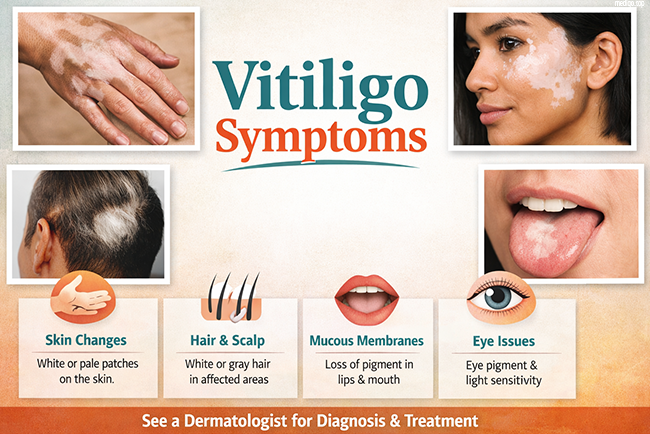
Vitiligo symptoms develop when pigment-producing melanocytes stop functioning properly. As a result, affected skin areas lose their natural color. Vitiligo is not infectious or fatal. However, it often creates emotional distress due to visible skin changes. Moreover, symptoms differ significantly from person to person. While some individuals experience slow progression, others notice rapid changes. Therefore, understanding early signs remains important for timely care.
In many cases, vitiligo symptoms begin quietly. Initially, small pale patches may appear on the skin. These spots often form on sun-exposed areas. For example, the face and hands are common starting points. Additionally, patch edges may appear smooth or slightly uneven. Some people also report mild itching before pigment loss. Consequently, early recognition allows better symptom monitoring.
The most recognizable vitiligo symptom involves depigmented skin patches. These patches usually appear milky white or light pink. Over time, their size may expand. However, some areas remain unchanged for years. In many cases, patterns appear symmetrically on both sides of the body. Conversely, segmental vitiligo affects only one side. Therefore, pattern type helps doctors understand disease behavior.
Vitiligo symptoms frequently affect certain body regions. The face remains one of the most common sites. Areas around the eyes and mouth often show early changes. Similarly, hands, feet, knees, and elbows are commonly involved. Moreover, genital regions may lose pigment. Underarms and groin areas can also show symptoms. Because friction plays a role, repeated rubbing may worsen depigmentation.
Hair color changes represent another important vitiligo symptom. Hair growing from affected skin may gradually turn white or gray. This condition is known as leukotrichia. Additionally, scalp hair, eyebrows, and eyelashes may lose pigment. In men, beard hair often changes color as well. Consequently, hair involvement suggests deeper melanocyte loss.
In some individuals, vitiligo symptoms affect mucous membranes. For instance, pale patches may develop inside the mouth. Lips may gradually lose their natural tone. Furthermore, the lining of the nose can appear lighter. These changes often go unnoticed at first. Therefore, medical examinations play an important role in early detection.
Although less common, eye-related vitiligo symptoms may occur. Pigment changes can appear in the retina. However, eye color usually remains unchanged. In rare situations, mild inflammation may develop. As a result, slight light sensitivity can occur. Regular eye checkups help monitor these symptoms effectively.
Vitiligo symptoms progress differently for each person. Some individuals experience sudden spreading of patches. Others notice long periods without any changes. Additionally, emotional stress may trigger new areas. Sunburn can also worsen pigment loss. In certain cases, the condition stabilizes naturally. Therefore, predicting progression remains difficult.
Read more >> Acid Reflux Symptoms: Common Signs, Causes, and Early Warnings
Beyond physical signs, vitiligo symptoms often impact mental health. Visible skin changes may lower self-confidence. Consequently, social anxiety can develop. Children and teenagers may feel especially affected. However, emotional support from family can help greatly. Counseling also improves coping skills and self-acceptance.
Professional care becomes essential once symptoms appear. A dermatologist can confirm vitiligo through examination. Moreover, early diagnosis helps guide treatment options. Sudden or widespread pigment loss requires immediate evaluation. Associated autoimmune conditions should also be screened. Therefore, timely medical care supports better long-term management.
Vitiligo symptoms mainly involve loss of skin pigmentation. Hair, mucous membranes, and eyes may also show changes. While progression varies, early signs should not be ignored. Medical guidance helps manage symptoms effectively. With awareness and support, individuals can live confidently with vitiligo.