Physical Address
304 North Cardinal St.
Dorchester Center, MA 02124
Physical Address
304 North Cardinal St.
Dorchester Center, MA 02124

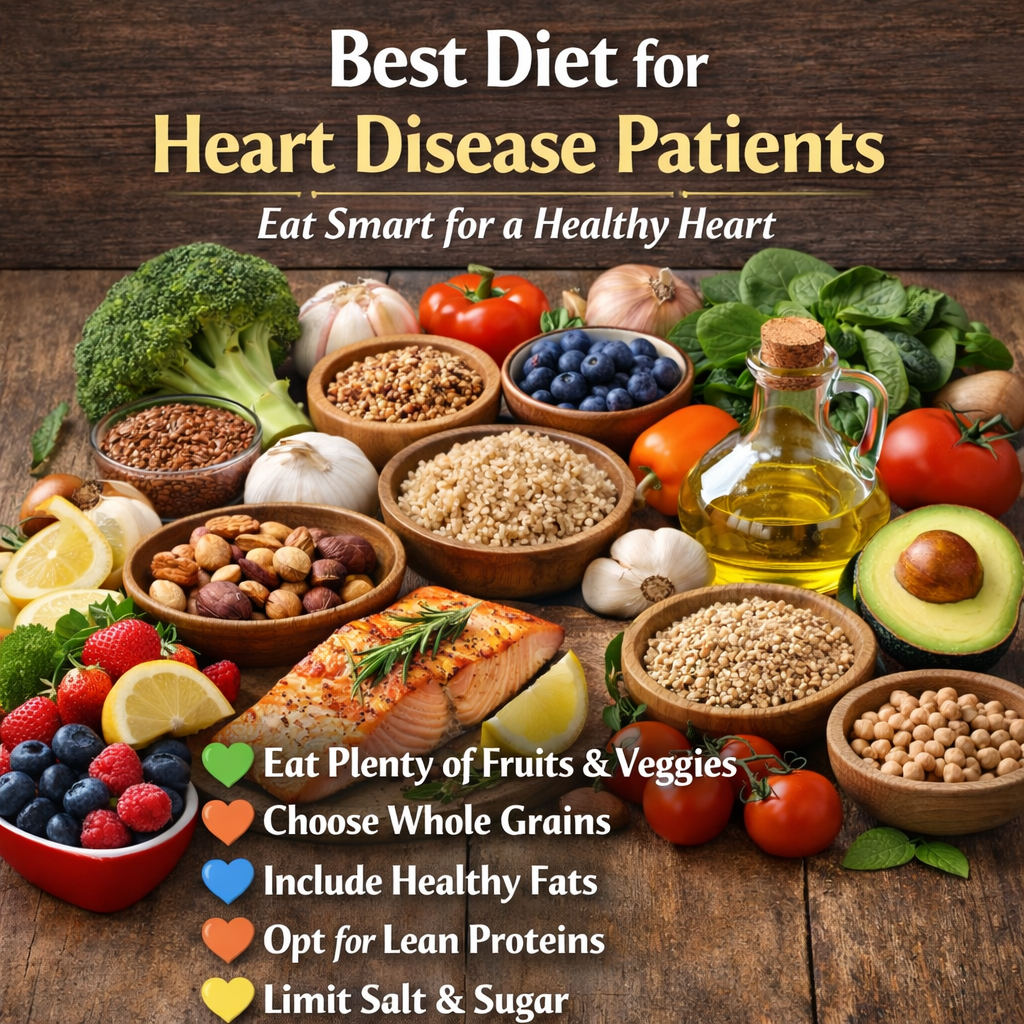
A proper diet plays a critical role in managing heart disease. The heart depends on clean blood vessels and stable cholesterol levels. However, unhealthy eating habits can increase plaque buildup and restrict blood flow. As a result, the risk of heart attack and stroke increases significantly. Therefore, heart patients must focus on foods that support circulation and reduce inflammation. A balanced diet also helps control blood pressure, blood sugar, and body weight. These factors directly affect heart health and long-term recovery.
Fruits and vegetables should form the foundation of a heart-healthy diet. They provide essential vitamins, minerals, antioxidants, and fiber. These nutrients protect blood vessels and reduce harmful cholesterol levels. For example, berries, oranges, spinach, carrots, and broccoli support heart function. Additionally, potassium in fruits and vegetables helps regulate blood pressure. Fresh produce works better than processed alternatives. Patients should aim for at least five servings daily. This habit strengthens the heart and improves overall health.
Whole grains offer significant benefits for heart disease patients. They contain fiber, which helps lower LDL cholesterol. Examples include oats, brown rice, quinoa, and whole wheat bread. In contrast, refined grains lack fiber and increase blood sugar quickly. This sudden spike can harm blood vessels over time. Therefore, patients should replace white rice and white bread with whole grain options. Oats are especially helpful because they contain beta-glucan, which supports cholesterol reduction. Consistent whole grain intake improves cardiovascular stability.
Not all fats harm the heart. Healthy fats actually protect cardiovascular function. Sources include olive oil, avocados, nuts, and fatty fish like salmon. These foods contain omega-3 fatty acids, which reduce inflammation and improve cholesterol balance. On the other hand, trans fats and saturated fats increase heart risk. These harmful fats exist in fried foods, processed snacks, and fatty meats. Patients should avoid these items whenever possible. Choosing healthy fats supports artery health and improves heart performance.
Read more >> Symptoms of Vitamin Deficiency Diseases
Protein helps maintain muscles and body function. However, the protein source matters greatly for heart patients. Lean protein options include fish, skinless chicken, beans, and lentils. Fish such as salmon and tuna provide omega-3 fatty acids. These nutrients protect the heart and reduce abnormal rhythms. Plant-based proteins also offer fiber and antioxidants. Red meat and processed meat should be limited because they increase cholesterol levels. Therefore, lean and plant protein options remain the safest choice.
Excess sodium raises blood pressure and strains the heart. Many packaged and processed foods contain high salt levels. Examples include chips, canned soups, and fast food. Patients should read nutrition labels carefully before eating. Cooking at home allows better salt control. Herbs and spices can replace salt without reducing flavor. The daily sodium intake should stay below recommended limits. Lower salt consumption helps maintain healthy blood pressure and protects heart function.
Sugar contributes to weight gain, diabetes, and heart complications. Sugary drinks, desserts, and packaged snacks increase blood sugar rapidly. Over time, these foods damage blood vessels. Therefore, patients should reduce sugary foods significantly. Natural sugar from fruits is a better option. Whole foods provide nutrients without harmful additives. Processed foods also contain unhealthy fats and sodium. Avoiding these foods improves heart health and energy levels.
Proper hydration supports circulation and organ function. Water helps the heart pump blood efficiently. Patients should drink enough water throughout the day. However, sugary drinks and soda should be avoided. Portion control also plays an important role. Eating large portions increases weight and heart strain. Smaller, balanced meals support steady energy and heart stability. Consistency in portion control improves long-term outcomes.
The Mediterranean diet is widely recommended for heart disease patients. This eating pattern includes fruits, vegetables, fish, olive oil, nuts, and whole grains. It limits processed foods and unhealthy fats. Studies show that this diet improves cholesterol and reduces heart risk. Additionally, it supports healthy weight and blood pressure. Patients who follow this diet often experience better heart health and improved quality of life.
A heart-healthy diet improves recovery and prevents future complications. Patients should focus on fruits, vegetables, whole grains, healthy fats, and lean protein. At the same time, they must limit salt, sugar, and processed foods. Consistent healthy eating strengthens the heart and improves overall wellness. Small daily changes produce long-term benefits. Therefore, adopting a balanced and sustainable diet remains essential for heart disease management.