Physical Address
304 North Cardinal St.
Dorchester Center, MA 02124
Physical Address
304 North Cardinal St.
Dorchester Center, MA 02124
Early symptoms of heart blockage often appear gradually and can be easy to ignore. The condition usually develops due to reduced blood flow in the heart arteries. This happens when fatty deposits build up inside the vessels. Medically, this condition is linked to Coronary artery disease.
Many people mistake early signs for stress or fatigue. However, ignoring these symptoms can increase health risks over time. Early detection helps prevent severe complications like heart attack. In extreme cases, blocked arteries can lead to Myocardial infarction. Understanding these early signals can protect long-term heart health.
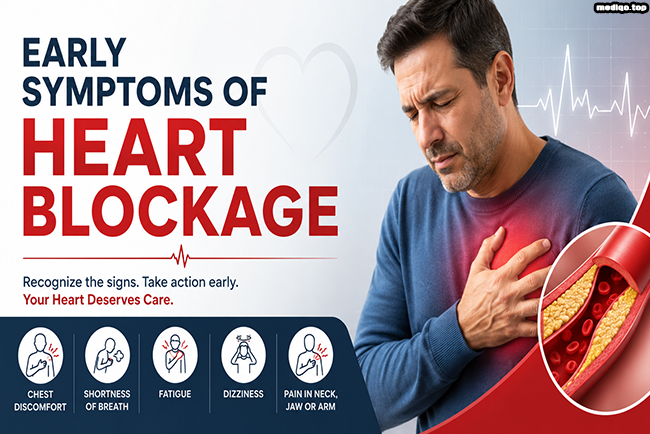
Chest pain remains one of the most common early symptoms of heart blockage. The pain may feel like pressure, heaviness, or tightness in the chest. It can appear during physical activity or emotional stress. In some cases, it may spread to the arms, neck, or jaw.
This discomfort happens when the heart does not receive enough oxygen-rich blood. The pain may come and go, which makes it easy to ignore. However, repeated chest discomfort should never be taken lightly. Even mild symptoms can indicate narrowing of the heart arteries.
Shortness of breath often appears even during light activities. You may feel breathless while walking or climbing stairs. This happens when the heart struggles to pump blood efficiently. As a result, the body receives less oxygen than it needs.
Unusual fatigue is another early warning sign. People often feel tired without doing heavy work. This fatigue does not improve with rest. It occurs because the heart works harder to maintain blood flow. When combined with breathlessness, it strongly indicates reduced heart function.
Dizziness can occur when the brain receives less oxygen due to poor circulation. Some people also experience light-headedness or sudden weakness. These symptoms may appear suddenly and without warning.
Cold sweating is another common sign. The body may respond to heart stress by producing excessive sweat. Nausea or stomach discomfort can also occur in some cases. These symptoms often confuse people because they resemble digestive issues. However, when they occur with chest discomfort, they may signal heart blockage.
Read more >> Prediabetes Symptoms You Should Not Ignore
Several risk factors increase the chance of developing heart blockage. High cholesterol, smoking, diabetes, and high blood pressure play major roles. Lack of physical activity also increases risk. Poor diet with high saturated fats contributes to artery narrowing.
Family history also matters. People with close relatives having heart disease face higher risk. Stress and obesity further increase strain on the heart. When these factors combine, early symptoms may appear sooner and progress faster.
Early symptoms should never be ignored, especially when they repeat frequently. Chest discomfort, breathlessness, and fatigue together need attention. These signs suggest reduced blood flow in the heart.
Medical evaluation helps identify blockage early. Doctors may recommend tests to check heart function and artery condition. Early diagnosis improves treatment outcomes and reduces complications. Lifestyle changes also play an important role in managing symptoms effectively.
Early symptoms of heart blockage often start silently but progress over time. Recognizing chest pain, breathlessness, fatigue, and dizziness can help prevent serious complications. Healthy lifestyle choices support better heart function.
Regular monitoring of risk factors also helps reduce chances of severe heart disease. Awareness remains the most powerful tool for early prevention. Taking early symptoms seriously can protect life and long-term cardiovascular health.Early symptoms of heart blockage often appear gradually and can be easy to ignore. The condition usually develops due to reduced blood flow in the heart arteries. This happens when fatty deposits build up inside the vessels. Medically, this condition is linked to Coronary artery disease.
Many people mistake early signs for stress or fatigue. However, ignoring these symptoms can increase health risks over time. Early detection helps prevent severe complications like heart attack. In extreme cases, blocked arteries can lead to Myocardial infarction. Understanding these early signals can protect long-term heart health.
Chest pain remains one of the most common early symptoms of heart blockage. The pain may feel like pressure, heaviness, or tightness in the chest. It can appear during physical activity or emotional stress. In some cases, it may spread to the arms, neck, or jaw.
This discomfort happens when the heart does not receive enough oxygen-rich blood. The pain may come and go, which makes it easy to ignore. However, repeated chest discomfort should never be taken lightly. Even mild symptoms can indicate narrowing of the heart arteries.
Shortness of breath often appears even during light activities. You may feel breathless while walking or climbing stairs. This happens when the heart struggles to pump blood efficiently. As a result, the body receives less oxygen than it needs.
Unusual fatigue is another early warning sign. People often feel tired without doing heavy work. This fatigue does not improve with rest. It occurs because the heart works harder to maintain blood flow. When combined with breathlessness, it strongly indicates reduced heart function.
Dizziness can occur when the brain receives less oxygen due to poor circulation. Some people also experience light-headedness or sudden weakness. These symptoms may appear suddenly and without warning.
Cold sweating is another common sign. The body may respond to heart stress by producing excessive sweat. Nausea or stomach discomfort can also occur in some cases. These symptoms often confuse people because they resemble digestive issues. However, when they occur with chest discomfort, they may signal heart blockage.
Several risk factors increase the chance of developing heart blockage. High cholesterol, smoking, diabetes, and high blood pressure play major roles. Lack of physical activity also increases risk. Poor diet with high saturated fats contributes to artery narrowing.
Family history also matters. People with close relatives having heart disease face higher risk. Stress and obesity further increase strain on the heart. When these factors combine, early symptoms may appear sooner and progress faster.
Early symptoms should never be ignored, especially when they repeat frequently. Chest discomfort, breathlessness, and fatigue together need attention. These signs suggest reduced blood flow in the heart.
Medical evaluation helps identify blockage early. Doctors may recommend tests to check heart function and artery condition. Early diagnosis improves treatment outcomes and reduces complications. Lifestyle changes also play an important role in managing symptoms effectively.
Early symptoms of heart blockage often start silently but progress over time. Recognizing chest pain, breathlessness, fatigue, and dizziness can help prevent serious complications. Healthy lifestyle choices support better heart function.
Regular monitoring of risk factors also helps reduce chances of severe heart disease. Awareness remains the most powerful tool for early prevention. Taking early symptoms seriously can protect life and long-term cardiovascular health.