Physical Address
304 North Cardinal St.
Dorchester Center, MA 02124
Physical Address
304 North Cardinal St.
Dorchester Center, MA 02124

Alzheimer’s disease is the most common cause of dementia worldwide. It slowly damages memory, thinking, and daily functioning. Many people mistake the earliest symptoms for normal aging, which delays diagnosis and treatment. Recognizing the warning signs early allows individuals and families to seek medical advice, begin treatment sooner, and prepare for future care.
This Alzheimer’s disease early symptoms checklist explains the most common early signs and helps you understand when it is time to consult a healthcare professional.
Alzheimer’s disease is a progressive brain disorder that destroys nerve cells over time. The condition affects memory, language, reasoning, and behavior. Although it mainly develops after age 65, younger adults can also develop early-onset Alzheimer’s disease.
Scientists believe the disease develops due to abnormal protein deposits in the brain that damage communication between brain cells. As more cells die, brain function gradually declines.
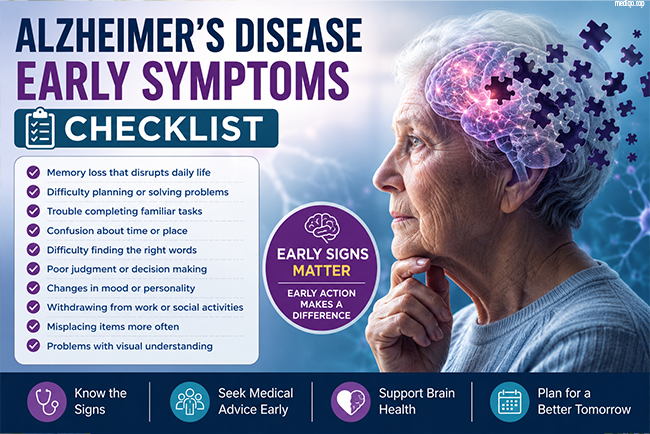
Review the following checklist carefully. One symptom alone does not confirm Alzheimer’s disease. However, several persistent symptoms deserve medical evaluation.
The earliest symptom often involves forgetting recently learned information. People may repeatedly ask the same questions, forget important dates, or rely heavily on reminder notes.
Occasional forgetfulness is normal. Persistent memory problems that interfere with daily life are not.
Simple tasks such as managing finances, following recipes, or organizing schedules become increasingly difficult. Concentration often decreases, and familiar tasks may take much longer than before.
Someone may struggle to drive to familiar places, use household appliances, or complete routine work responsibilities. Daily activities that once felt automatic become confusing.
People with early Alzheimer’s may lose track of dates, seasons, or appointments. They may forget where they are or how they arrived at a particular location.
Vision changes may affect reading, judging distance, recognizing colors, or identifying objects. These difficulties can increase the risk of falls or driving accidents.
People may stop during conversations because they cannot remember common words. They may repeat themselves or substitute incorrect words, making communication difficult.
Objects such as keys, glasses, wallets, or phones may be placed in unusual locations. The person often cannot retrace their steps to find them and may accuse others of stealing.
Declining decision-making skills often appear early. Individuals may spend money carelessly, neglect personal hygiene, or become vulnerable to scams.
Many people begin avoiding social gatherings, hobbies, or family activities because conversations become difficult or embarrassing. Isolation may gradually increase.
Mood swings, anxiety, depression, irritability, fearfulness, or suspicion can appear before significant memory decline. Personality changes may become noticeable to close family members.
Read more >> Memory Loss: Early Signs of Dementia You Should Know
Many people worry about memory problems as they grow older. Normal aging usually involves occasionally forgetting names or appointments but remembering them later.
Alzheimer’s disease causes memory loss that continues to worsen and disrupts daily life. The condition also affects reasoning, communication, and independent living.
If memory issues interfere with work, relationships, or daily routines, professional evaluation becomes important.
You should schedule a medical evaluation if several symptoms from this checklist continue for months or become progressively worse.
Doctors may perform:
Early diagnosis allows patients to access medications, lifestyle interventions, support services, and future care planning.
There is no guaranteed way to prevent Alzheimer’s disease. However, research suggests that healthy lifestyle habits may lower the risk or delay cognitive decline.
Helpful habits include:
These habits also support overall brain and heart health.
Recognizing the early symptoms of Alzheimer’s disease can make a significant difference in long-term care and quality of life. This Alzheimer’s disease early symptoms checklist provides a simple way to identify warning signs that should not be ignored. While occasional forgetfulness is a normal part of aging, persistent memory loss combined with changes in thinking, behavior, and daily functioning deserves medical attention.
Early diagnosis cannot cure Alzheimer’s disease, but it allows patients and families to access treatment, plan ahead, and receive valuable support sooner. If you notice several symptoms in yourself or a loved one, consult a healthcare professional for a complete evaluation. Early action remains one of the most effective tools for managing Alzheimer’s disease.