Physical Address
304 North Cardinal St.
Dorchester Center, MA 02124
Physical Address
304 North Cardinal St.
Dorchester Center, MA 02124

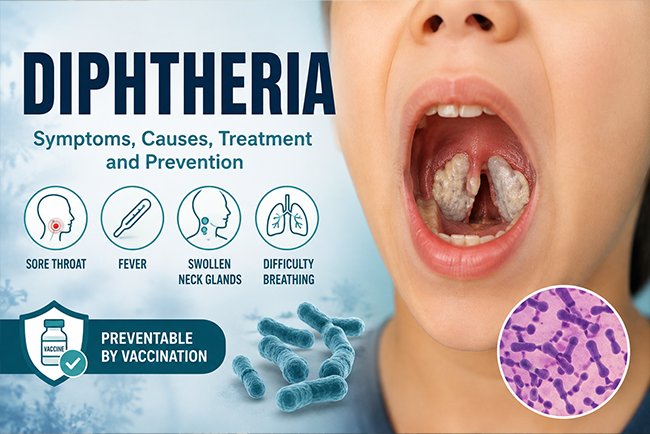
Diphtheria is a serious bacterial infection that can affect the throat, nose, and skin. It is caused mainly by toxin-producing Corynebacterium diphtheriae. The toxin can damage the heart and nervous system, making early diagnosis and treatment important. Fortunately, diphtheria is preventable through vaccination.
Diphtheria is a contagious infection that usually affects the upper respiratory tract. It can spread when an infected person coughs or sneezes. Close contact with infected people or contaminated materials can also spread the bacteria.
After entering the body, toxin-producing bacteria can create a thick gray coating in the throat or nose. This coating can make breathing and swallowing difficult. In severe cases, the toxin can enter the bloodstream and affect other organs.
Symptoms of diphtheria usually appear 2 to 5 days after exposure. Common symptoms include:
The characteristic membrane can obstruct the airway. In serious cases, diphtheria toxin can cause heart inflammation, nerve damage, kidney problems, and other complications.
Read More>>Tetanus: Causes, Symptoms, Treatment, and Prevention
Diphtheria spreads primarily through respiratory droplets produced when an infected person coughs or sneezes. Direct contact with infected secretions or skin sores can also transmit the bacteria.
People who have not been vaccinated or who have not completed their recommended vaccinations face a higher risk of infection. Overcrowding and low vaccination coverage can also increase transmission.
Diphtheria requires urgent medical treatment. If healthcare professionals suspect diphtheria, treatment should begin promptly rather than waiting for laboratory confirmation.
Treatment commonly includes diphtheria antitoxin and antibiotics. The antitoxin helps neutralize circulating toxin, while antibiotics eliminate the bacteria and reduce further transmission. Severe respiratory disease may also require careful airway and respiratory support.
People who have been in close contact with a confirmed case may need preventive antibiotics and an assessment of their vaccination status.
Read More>>Fall 2: Deadpoint – Release Date, Story, Cast, and Everything You Need to Know
The most effective way to prevent diphtheria is vaccination. Diphtheria vaccines are commonly given as combination vaccines that also protect against diseases such as tetanus and pertussis.
WHO recommends a primary series of three doses of a diphtheria-containing vaccine, followed by booster doses during childhood and adolescence. Vaccination schedules can vary by country, so parents and adults should follow recommendations from their local health authorities.
Maintaining high vaccination coverage is important because gaps in immunization can allow diphtheria outbreaks to occur. In 2025, approximately 85% of infants worldwide received the recommended three doses of diphtheria-containing vaccine, according to WHO.
Seek urgent medical attention if you or a child develops symptoms such as difficulty breathing, difficulty swallowing, significant throat swelling, or a thick gray membrane in the throat—especially if vaccination is incomplete or there has been known exposure to diphtheria.
Early treatment can significantly reduce the risk of severe complications and death.
Diphtheria is a potentially life-threatening bacterial infection, but diphtheria vaccination can prevent it. Recognizing symptoms early and receiving prompt medical care are essential. Keeping vaccinations up to date also protects individuals and helps reduce the risk of outbreaks in the community.
Medical note: This article is for general educational purposes and does not replace professional medical advice. If diphtheria is suspected, seek urgent medical care.