Physical Address
304 North Cardinal St.
Dorchester Center, MA 02124
Physical Address
304 North Cardinal St.
Dorchester Center, MA 02124

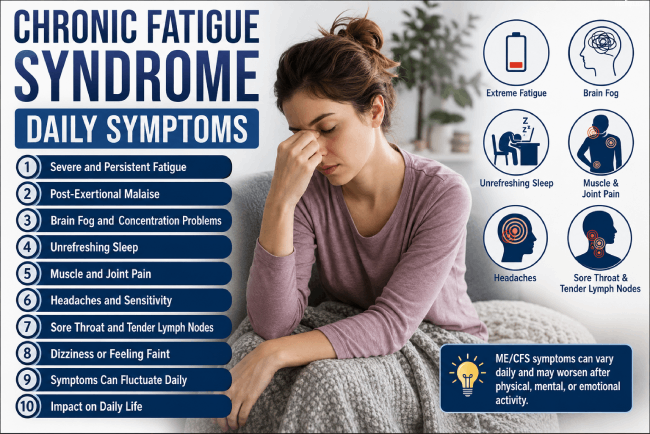
Chronic fatigue syndrome, also called ME/CFS, can affect many parts of daily life. It is more than ordinary tiredness after a busy day. People with this condition may experience severe fatigue, sleep problems, pain, and difficulty thinking clearly.
The chronic fatigue syndrome daily symptoms can also vary from person to person. Some symptoms may remain constant, while others can become worse after physical or mental activity. Therefore, understanding the typical symptoms can help people recognize concerning patterns and seek appropriate medical care.
Severe fatigue is one of the most noticeable symptoms of ME/CFS. It can make everyday activities feel unusually difficult.
A person may wake up feeling exhausted despite getting enough time in bed. Simple activities, such as showering, cooking, or walking, may require significant effort.
However, this fatigue differs from normal tiredness. Rest may not provide the expected improvement.
Post-exertional malaise (PEM) is a key feature of ME/CFS. Symptoms can become significantly worse after physical, mental, or emotional activity.
For example, someone might feel relatively stable after a short walk. Several hours later or the next day, their fatigue and other symptoms may intensify.
The worsening can last for days or longer. Because of this, people with ME/CFS often need to manage their activities carefully.
Cognitive difficulties are another common concern. People may describe this experience as brain fog.
They might struggle to concentrate, remember information, find the right words, or process information quickly. Reading, working, studying, or following complicated conversations can become challenging.
These difficulties may become more noticeable when other symptoms flare.
Sleep problems can occur even when a person spends many hours in bed. Someone may wake up feeling as though they have barely rested.
Some people also experience difficulty falling asleep, frequent waking, or changes in their normal sleep pattern.
Therefore, persistent exhaustion after sleep is worth discussing with a healthcare professional.
ME/CFS may involve widespread muscle or joint discomfort. Some people experience aching, tenderness, or headaches.
The intensity can fluctuate. Symptoms may also become more noticeable after exertion.
However, pain has many possible causes. A healthcare professional should assess persistent or unexplained pain rather than assuming it is caused by ME/CFS.
Recurring headaches can occur alongside other ME/CFS symptoms. Some individuals may also experience increased sensitivity to light, sound, or other environmental stimuli.
These symptoms can make busy environments harder to tolerate. Consequently, quiet surroundings and appropriate activity management may become important for some people.
Read more >> Early Symptoms of Autoimmune Diseases You Must Know
Some people with ME/CFS report a sore throat or tender lymph nodes. These symptoms may appear alongside periods of worsening illness.
They can resemble symptoms associated with infections. However, persistent symptoms require proper medical assessment because several conditions can cause similar problems.
Some individuals with ME/CFS experience dizziness, lightheadedness, or symptoms that worsen while standing.
These problems may relate to difficulties with the body’s response to upright posture. A healthcare professional can evaluate these symptoms and determine whether additional conditions may be involved.
One important characteristic of ME/CFS is variability. A person may have a relatively manageable day followed by a significant symptom flare.
Physical activity is not the only possible trigger. Mental concentration, emotional stress, poor sleep, and other factors may also influence symptoms.
Keeping a simple symptom diary can help identify patterns. It may also provide useful information during medical appointments.
Persistent fatigue does not automatically mean someone has ME/CFS. Anemia, thyroid disorders, sleep disorders, infections, medication effects, depression, and other health conditions can cause similar symptoms.
Therefore, unexplained or persistent fatigue deserves medical evaluation. A healthcare professional can review symptoms, medical history, medications, sleep patterns, and other possible causes.
There is currently no single test that confirms ME/CFS in every case. Diagnosis generally involves evaluating the overall symptom pattern while excluding other explanations.
The chronic fatigue syndrome daily symptoms can affect energy, sleep, thinking, pain levels, and the ability to perform everyday activities. Severe fatigue and post-exertional malaise are especially important features.
Because symptoms can overlap with many other conditions, self-diagnosis is not recommended. Anyone experiencing persistent, unexplained fatigue or significant worsening after activity should speak with a qualified healthcare professional.