Physical Address
304 North Cardinal St.
Dorchester Center, MA 02124
Physical Address
304 North Cardinal St.
Dorchester Center, MA 02124

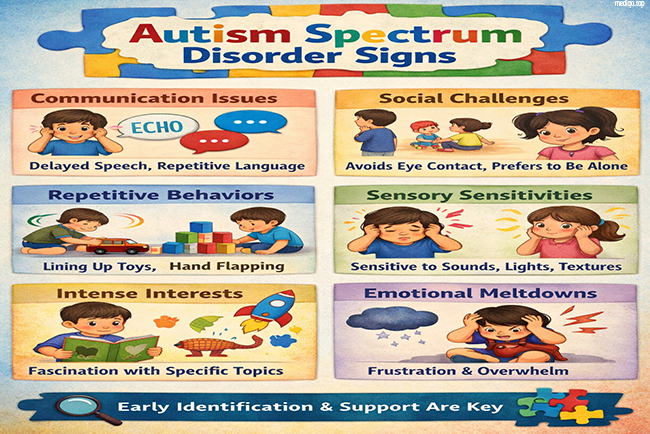
Autism Spectrum Disorder (ASD) is a neurodevelopmental condition that affects communication, behavior, and social interaction. The word “spectrum” reflects wide differences in abilities, challenges, and support needs. Signs often appear in early childhood, yet some individuals receive diagnoses later in life. Early recognition supports timely intervention, skill development, and family guidance. Understanding common signs helps caregivers, teachers, and clinicians respond appropriately and compassionately.
Many children with ASD show differences in early communication. Some speak later than peers or use fewer words. Others may repeat phrases, echo speech, or use unusual tones. Limited use of gestures, pointing, or facial expressions may appear. Children might not respond consistently to their names. They may prefer nonverbal communication or use language in literal ways. These patterns can vary greatly across individuals.
Social interaction differences are common autism spectrum disorder signs. Children may avoid eye contact or struggle with shared attention. They might prefer solitary play and show limited interest in peers. Understanding social cues, turn-taking, or pretend play can be difficult. Older individuals may find conversations exhausting or confusing. Friendships may feel challenging despite strong interest in connection.
Repetitive behaviors often provide comfort or predictability. These behaviors can include hand flapping, rocking, spinning objects, or lining items. Strong attachment to routines may appear, with distress during changes. Individuals might insist on specific orders, schedules, or rituals. These behaviors differ in intensity and purpose. They often help regulate sensory input or anxiety.
Many people with ASD experience sensory differences. Sensitivity to sounds, lights, textures, tastes, or smells can be noticeable. Some seek sensory input through movement or pressure. Others avoid certain clothing or foods due to texture. Crowded or noisy environments may cause overwhelm. Sensory profiles are unique and can change over time.
Focused interests represent another key sign. Individuals may develop deep knowledge about specific topics. These interests can bring joy, motivation, and learning opportunities. Attention to detail and strong memory often accompany them. When supported, focused interests can lead to academic or career strengths. Recognizing strengths alongside challenges is essential.
Emotional regulation can look different in autism. Frustration may escalate quickly during transitions or sensory overload. Meltdowns reflect distress rather than misbehavior. Some individuals struggle to identify or express emotions. Others appear calm while feeling overwhelmed internally. Supportive strategies can improve coping and resilience.
Autism spectrum disorder signs change with age. In toddlers, delayed speech or limited eye contact may appear. School-age children may struggle with peer relationships or classroom routines. Teens might face social anxiety or rigid thinking. Adults may experience workplace challenges or burnout. Recognition at any age can lead to meaningful support.
Read more >> New Virus Outbreak Symptoms: Early Signs, Causes, and Prevention
If multiple signs appear consistently, a professional evaluation is recommended. Pediatricians, psychologists, or developmental specialists can assess development. Early screening improves access to therapies and accommodations. Diagnosis also helps families understand behaviors and plan supports. Timely evaluation empowers informed decisions.
Read more >> Pirates Aggressively Pursue Framber Valdez as MLB Free Agency Heats Up
Support focuses on communication, social skills, and daily living abilities. Evidence-based therapies can help, including speech and behavioral approaches. Family education and school accommodations matter greatly. Respectful, individualized support promotes independence and well-being. Acceptance and understanding remain foundational.