Physical Address
304 North Cardinal St.
Dorchester Center, MA 02124
Physical Address
304 North Cardinal St.
Dorchester Center, MA 02124

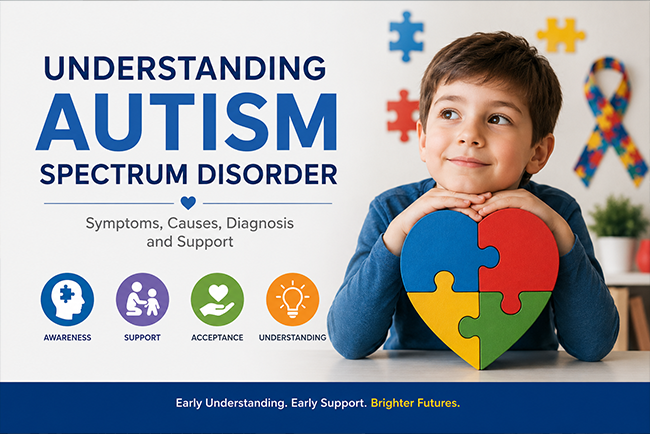
Autism Spectrum Disorder (ASD) is a developmental condition that affects how a person communicates, interacts with others, and experiences the world around them. The term “spectrum” reflects the wide range of abilities, challenges, and characteristics that individuals with autism may have.
Today, greater awareness and early intervention have helped many people with Autism Spectrum Disorder lead fulfilling and productive lives. Understanding ASD is essential for creating a more inclusive and supportive society.
The symptoms of Autism Spectrum Disorder can vary significantly from one person to another. However, some common signs often appear during early childhood.
People with ASD may:
Many individuals with display repetitive behaviors, such as:
Additionally, people with ASD may be highly sensitive to sounds, lights, textures, tastes, or smells. On the other hand, some individuals may seek extra sensory stimulation.
Read More>>OCD (Obsessive Compulsive Disorder)
Researchers have not identified a single cause of Autism Spectrum Disorder. Instead, evidence suggests that a combination of genetic and environmental factors contributes to its development.
Several factors associated with ASD include:
Importantly, extensive scientific research has shown that vaccines do not cause
Healthcare professionals diagnose Autism Spectrum Disorder through developmental assessments, behavioral observations, and parent interviews.
Doctors often evaluate:
Early diagnosis plays a crucial role because it allows children to access support services sooner. As a result, many individuals experience significant improvements in communication, learning, and daily functioning.
Read More>>Ink: Danny Boyle’s Explosive New Drama Set to Become One of 2026’s
Although there is currently no cure for Autism Spectrum Disorder, various therapies and support programs can help individuals develop important life skills.
Behavioral interventions can improve communication, social interaction, and adaptive skills.
Speech therapy helps individuals enhance verbal and nonverbal communication abilities.
Occupational therapy focuses on daily living skills, sensory processing, and independence.
Specialized educational programs provide tailored learning strategies that meet each individual’s unique needs.
Furthermore, family support and community resources play a vital role in helping people with ASD thrive.
Many individuals with Autism Spectrum Disorder possess remarkable strengths, including creativity, attention to detail, strong memory skills, and exceptional problem-solving abilities.
With appropriate support, accommodations, and understanding, people with ASD can succeed in school, employment, relationships, and community life. Therefore, promoting acceptance and inclusion benefits everyone.
Autism Spectrum Disorder is a complex neurodevelopmental condition that affects millions of people worldwide. While symptoms and challenges vary, early diagnosis, effective therapies, and strong support systems can significantly improve quality of life. By increasing awareness and understanding, society can create opportunities for individuals with ASD to reach their full potential and contribute their unique talents to the world.