Physical Address
304 North Cardinal St.
Dorchester Center, MA 02124
Physical Address
304 North Cardinal St.
Dorchester Center, MA 02124

Blood cancer affects the production and function of blood cells. It usually begins in bone marrow or the lymphatic system. Common types include leukemia, lymphoma, and multiple myeloma. These cancers can progress slowly or rapidly depending on the type.
In adults, early detection plays a key role in treatment success. Symptoms often appear mild at first. Many people ignore them or confuse them with common illnesses. Understanding early warning signs helps improve outcomes.
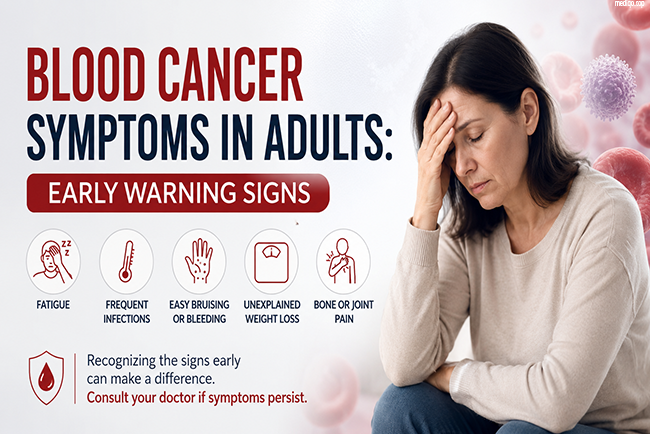
Early symptoms are often vague and easy to miss. Fatigue is one of the most common signs. It happens due to reduced healthy red blood cells. People may feel tired even after rest.
Frequent infections can also occur. This happens when white blood cells fail to function properly. Fever without a clear reason is another warning sign.
Unexplained weight loss may appear early. Loss of appetite can also be noticed. Some adults report night sweats that disturb sleep.
Bruising or bleeding easily is another symptom. Small cuts may take longer to heal. These signs should not be ignored.
As blood cancer progresses, physical signs become clearer. Swollen lymph nodes in the neck, armpits, or groin are common. These may feel painless but persistent.
Pale skin may develop due to anemia. Shortness of breath can appear during simple activities. Headaches and dizziness may also occur.
Bone or joint pain can be present in some cases. This is more common in leukemia or multiple myeloma. The pain may worsen at night.
Some patients notice frequent nosebleeds or bleeding gums. This happens due to low platelet counts in the blood.
Read more >> Cervical Cancer Early Detection Signs You Should Know
In advanced stages, symptoms become more severe. High fever that does not improve may occur. Infections become more frequent and harder to control.
The immune system becomes very weak. Even mild infections can become serious. Severe fatigue may prevent normal daily activities.
Swelling in the abdomen can appear. This may be due to enlarged liver or spleen. Pain or pressure in this area is also possible.
In some cases, neurological symptoms develop. These include confusion or difficulty concentrating. Immediate medical attention is required in such cases.
Several risk factors may increase the chance of blood cancer. These include genetic conditions and a family history of cancer. Exposure to radiation or certain chemicals may also contribute.
Smoking is linked to some types of leukemia. A weakened immune system may also raise risk levels.
You should see a doctor if symptoms last more than two weeks. Persistent fatigue, fever, or unexplained weight loss should never be ignored.
Early consultation improves diagnosis speed. Blood tests and bone marrow tests are often used for confirmation.
Doctors usually begin with a complete blood count test. This helps detect abnormal blood cell levels. Further tests may include imaging scans and bone marrow biopsy.
Early diagnosis helps in planning effective treatment. Treatment options may include chemotherapy, targeted therapy, or stem cell transplantation.
Regular follow-up is important during treatment. It helps track progress and manage side effects.
Awareness of symptoms is essential for early detection. Many people delay medical care due to fear or lack of knowledge.
Pay attention to persistent or unusual changes in your body. Do not ignore repeated infections or unexplained weakness.
Timely action can significantly improve survival rates. A healthy lifestyle and regular checkups support overall blood health.
Blood cancer is serious but manageable when detected early. Understanding symptoms in adults is the first step toward better outcomes.