Physical Address
304 North Cardinal St.
Dorchester Center, MA 02124
Physical Address
304 North Cardinal St.
Dorchester Center, MA 02124

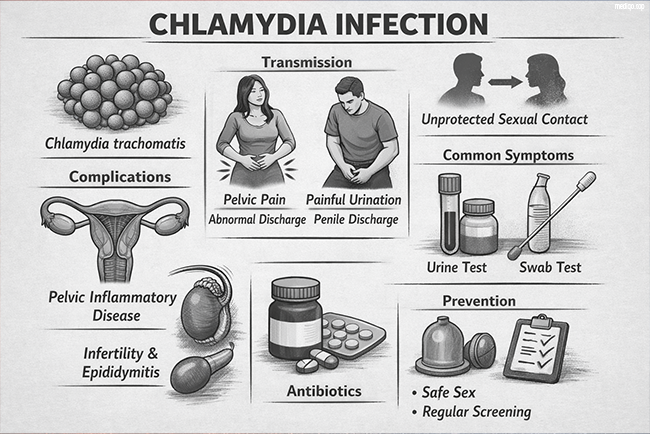
Chlamydia infection is one of the most common sexually transmitted infections worldwide. It is caused by the bacterium Chlamydia trachomatis. The infection often spreads through unprotected sexual contact. Many people do not notice symptoms at first. This silent nature increases the risk of long-term health problems. Early awareness and testing help reduce complications.
Chlamydia infection spreads through vaginal, anal, or oral sex. The bacteria pass from one person to another during intimate contact. It can affect people of all genders and ages. Teenagers and young adults face higher risk. Lack of condom use increases transmission. Sharing sex toys without cleaning can also spread the infection.
Many infected people show no clear symptoms. When symptoms appear, they are often mild. Women may notice unusual vaginal discharge or burning during urination. Lower abdominal pain can also occur. Men may experience penile discharge or testicular discomfort. Rectal infection may cause pain, discharge, or bleeding. Because symptoms are often absent, testing remains essential.
Doctors diagnose chlamydia infection through simple laboratory tests. A urine sample is commonly used. Swab tests may be taken from the cervix, urethra, throat, or rectum. These tests are accurate and quick. Regular screening is advised for sexually active individuals. Early diagnosis prevents further spread and health damage.
Untreated chlamydia infection can cause serious problems. In women, it may lead to pelvic inflammatory disease. This condition can damage reproductive organs. Infertility and ectopic pregnancy risk may increase. In men, the infection can cause epididymitis and pain. Long-term infection may also raise the risk of HIV transmission. Prompt care reduces these dangers.
Chlamydia infection is curable with antibiotics. Doctors usually prescribe oral medication. Patients should complete the full treatment course. Sexual activity should be avoided during treatment. Partners should also receive testing and care. Follow-up testing may be recommended to ensure clearance. Early treatment leads to full recovery.
Read more >> Autism Spectrum Disorder Signs: Early Symptoms, Behaviors, and Support
Prevention plays a key role in controlling chlamydia infection. Consistent condom use lowers transmission risk. Regular screening helps detect silent cases. Limiting sexual partners reduces exposure. Open communication with partners supports safer choices. Avoid sharing unclean sex toys. Education and awareness protect long-term health.
Receiving a diagnosis can feel stressful. However, chlamydia infection is manageable and treatable. Honest discussion with partners is important. Follow medical advice carefully. Attend follow-up visits if advised. Learning about sexual health empowers better decisions. With proper care, people can maintain a healthy life.