Physical Address
304 North Cardinal St.
Dorchester Center, MA 02124
Physical Address
304 North Cardinal St.
Dorchester Center, MA 02124
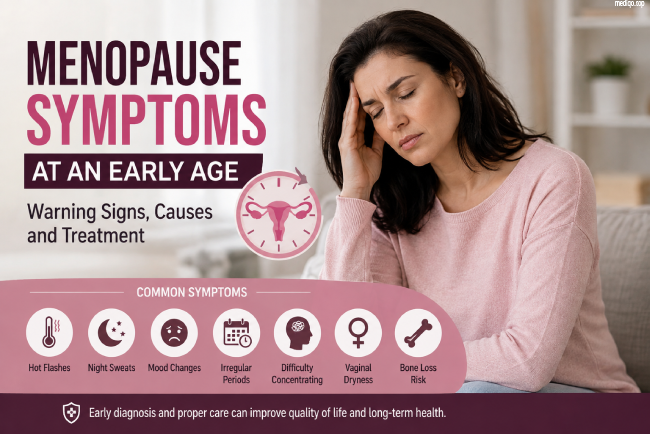
Experiencing menopause symptoms at an early age can feel unexpected and confusing. Menopause usually occurs between ages 45 and 55, but some women experience menopause earlier. Early menopause generally refers to menopause before age 45, while menopause before age 40 is often classified as premature menopause.
Recognizing the warning signs can help you seek medical advice sooner. Early evaluation is especially important because reduced estrogen levels may affect bone and cardiovascular health.
Menopause occurs when menstrual periods permanently stop because ovarian hormone production declines. Menopause is confirmed after 12 consecutive months without a menstrual period when hormonal contraception is not responsible.
Before menopause, many women experience perimenopause. During this transition, periods may become irregular, lighter, heavier, shorter, or longer. Hormonal changes can also cause several physical and emotional symptoms.
The first noticeable sign may be a change in your menstrual cycle. However, symptoms can vary significantly from person to person.
Common menopause symptoms at an early age include:
These symptoms may occur together or separately. Some women experience only mild changes, while others have symptoms that interfere with work, relationships, sleep, and daily activities.
Read more >> Bacterial vs Viral Infection: Key Differences
Early menopause can occur naturally, but several factors may increase the risk. A family history of early menopause can be important. Smoking and being underweight may also increase the likelihood.
Medical treatments can also cause early menopause. Chemotherapy, radiotherapy, and surgery that removes the ovaries may reduce ovarian function. In some cases, the cause remains unknown.
Another important condition is primary ovarian insufficiency (POI). It can cause reduced ovarian function before age 40 and may lead to irregular periods, infertility, and menopause-like symptoms.
Do not assume that irregular periods automatically mean menopause. Pregnancy, thyroid disorders, stress, certain medications, polycystic ovary syndrome, and other medical conditions can also affect menstrual cycles.
If you are younger than 45 and develop menopause-like symptoms, particularly irregular or absent periods, consult a gynecologist or other qualified healthcare professional. Your doctor may review your medical history and symptoms and may recommend blood tests or other examinations when appropriate.
Keeping a record of your menstrual cycle, hot flashes, sleep problems, mood changes, and other symptoms can also make your medical consultation more useful.
Treatment depends on your age, symptoms, medical history, fertility goals, and the underlying cause. Hormone therapy may be recommended for some women with early menopause because replacing hormones can help manage symptoms and protect bone health. However, hormone therapy is not appropriate for everyone, so it should be discussed with a healthcare professional.
Lifestyle measures can also support overall health. Regular physical activity, adequate calcium and vitamin D, nutritious food, healthy sleep habits, and avoiding smoking can be beneficial.
Early menopause may also affect fertility. Therefore, women who hope to become pregnant should discuss fertility options with a specialist as soon as possible.
Menopause symptoms at an early age should not be ignored. Changes in periods, hot flashes, night sweats, vaginal dryness, sleep problems, and mood changes may indicate hormonal changes, but other conditions can produce similar symptoms.
If these symptoms occur before age 45, professional evaluation can help identify the cause and guide appropriate treatment. Early care may also help protect long-term bone and cardiovascular health.