Physical Address
304 North Cardinal St.
Dorchester Center, MA 02124
Physical Address
304 North Cardinal St.
Dorchester Center, MA 02124

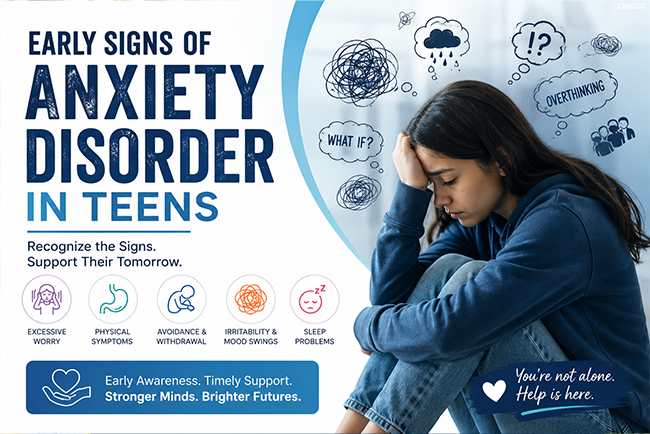
Anxiety is a normal response to stress and uncertainty. Most teenagers experience nervousness before exams, sports competitions, or social events. However, when anxiety becomes intense, persistent, and difficult to control, it may indicate an anxiety disorder. Recognizing the early signs of anxiety disorder in teens is important because early intervention can improve emotional well-being, academic performance, and social development.
Teenagers face many pressures in modern life. Academic expectations, social media, family responsibilities, and concerns about the future can contribute to chronic stress. While occasional worry is normal, ongoing anxiety can interfere with daily activities. Anxiety disorders have become one of the most common mental health conditions affecting adolescents worldwide. Understanding the warning signs allows parents, teachers, and caregivers to provide timely support.
One of the earliest indicators of an anxiety disorder is a noticeable change in emotional behavior. Teens may worry excessively about situations that seem minor to others. They often expect the worst outcomes and struggle to relax even when there is no immediate threat.
Common emotional signs include:
These symptoms may persist for weeks or months and can affect relationships and school performance.
Anxiety does not affect only the mind. It often produces physical symptoms that teenagers may not recognize as anxiety-related. Many teens complain about unexplained health issues before emotional symptoms become obvious.
Common physical signs include:
When medical evaluations fail to identify a physical cause, anxiety may be contributing to these symptoms.
Read more >> When to Get Cancer Screening Tests: Age and Risk Guide
Behavioral changes often provide valuable clues that a teenager is struggling with anxiety. Parents may notice shifts in habits, routines, or social interactions.
Warning signs include:
Avoidance behaviors are particularly important because they can strengthen anxiety over time and reduce confidence.
Social anxiety is common during adolescence. Teens with social anxiety often fear embarrassment, judgment, or rejection. They may avoid speaking in class, attending parties, or meeting new people.
Signs of social anxiety include:
These behaviors can limit social development and increase feelings of isolation if left unaddressed.
Not every worried teenager has an anxiety disorder. Mental health professionals typically look at the severity, duration, and impact of symptoms. Anxiety may require professional attention when symptoms:
Early diagnosis can prevent symptoms from becoming more severe and improve long-term outcomes.
Parents play a critical role in identifying and addressing anxiety symptoms. Open communication creates a safe environment where teenagers can discuss their concerns without fear of judgment.
Helpful strategies include:
Supportive parenting can help teens develop resilience and healthier coping mechanisms.
The early signs of anxiety disorder in teens often appear through emotional, physical, and behavioral changes. Persistent worry, unexplained physical complaints, avoidance behaviors, and social withdrawal are common warning signs. Recognizing these symptoms early can lead to faster intervention and better mental health outcomes. Parents, teachers, and caregivers should remain attentive to changes in a teenager’s behavior and seek professional support when anxiety begins to interfere with daily life. Early action can make a significant difference in a teen’s emotional health, confidence, and future well-being.