Physical Address
304 North Cardinal St.
Dorchester Center, MA 02124
Physical Address
304 North Cardinal St.
Dorchester Center, MA 02124
High cholesterol is often called a silent health problem because it usually develops without noticeable warning signs. Many people live with unhealthy cholesterol levels for years without realizing the risk. However, untreated cholesterol buildup can increase the chances of serious conditions such as Heart Disease and Stroke. Understanding high cholesterol symptoms and related warning signals helps people take early preventive action.
Cholesterol is a fatty substance found in the blood. The body needs cholesterol to build cells and produce hormones. Problems begin when low-density lipoprotein (LDL), also known as bad cholesterol, rises beyond healthy levels.
Excess LDL cholesterol sticks to artery walls and forms plaque. This buildup narrows blood vessels and reduces proper blood flow. Over time, this condition leads to a serious disorder known as Atherosclerosis.
One major challenge with high cholesterol is the absence of clear symptoms. Most individuals do not feel sick during the early stages. Cholesterol buildup happens gradually inside arteries without causing pain.
Many people discover the condition only after complications appear. Doctors usually detect it through routine blood tests rather than physical discomfort. This makes regular health screening extremely important for early diagnosis.
Although high cholesterol itself rarely causes symptoms, some physical signs may appear when levels remain uncontrolled for a long time.
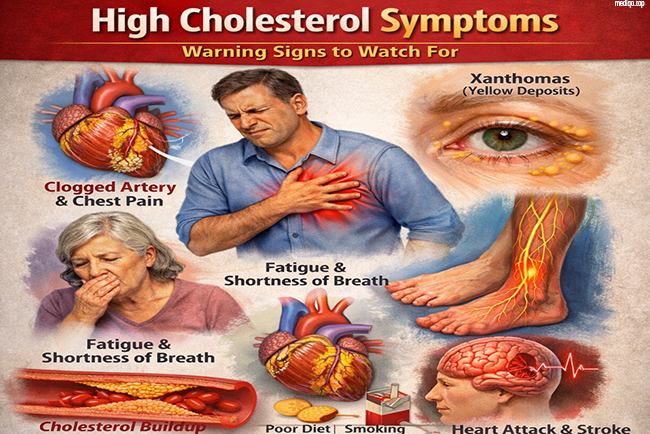
Blocked arteries may restrict oxygen-rich blood from reaching the heart. This restriction can cause chest discomfort or pressure known as angina. The symptom often appears during physical activity or emotional stress.
Persistent chest pain may signal developing heart complications and requires immediate medical evaluation.
Reduced blood circulation affects oxygen delivery throughout the body. As a result, people may experience unusual tiredness or breathing difficulty during routine activities.
These symptoms occur because the heart works harder to pump blood through narrowed arteries.
Some individuals develop fatty deposits called xanthomas. These yellowish patches may appear around the eyelids, elbows, knees, or hands.
Such visible signs often indicate long-term cholesterol imbalance and should not be ignored.
Plaque buildup can reduce circulation in arms and legs. Poor blood flow may cause numbness, tingling sensations, or cold extremities.
This symptom suggests peripheral artery involvement and may increase cardiovascular risk.
High cholesterol becomes dangerous when complications develop. Severe blockage can lead to life-threatening conditions such as Heart Attack.
Warning signs linked to complications include:
Immediate medical care becomes essential if these symptoms appear.
Read more >> Prediabetes Warning Signs: Early Symptoms You Should Never Ignore
Several lifestyle and genetic factors increase cholesterol levels. Understanding these risks helps prevent future complications.
Common risk factors include:
Managing these factors significantly improves heart health.
Health experts recommend cholesterol screening every four to six years for healthy adults. People with risk factors may need more frequent testing.
A lipid profile blood test measures LDL, HDL, and triglyceride levels. Early testing allows lifestyle correction before symptoms or complications develop.
Preventive lifestyle choices remain the most effective defense against high cholesterol.
Healthy habits include:
Consistent lifestyle improvement can lower cholesterol and protect long-term cardiovascular health.
High cholesterol symptoms often remain unnoticed until serious health problems arise. This silent condition gradually damages arteries and increases the risk of heart disease and stroke. Recognizing possible warning signs, maintaining regular health screenings, and adopting healthy habits can reduce complications significantly.
Early awareness and preventive action remain the best strategies for maintaining optimal cholesterol levels and overall well-being.