Physical Address
304 North Cardinal St.
Dorchester Center, MA 02124
Physical Address
304 North Cardinal St.
Dorchester Center, MA 02124
Iron deficiency is one of the most common nutritional problems in the world. It occurs when the body does not have enough iron to produce healthy red blood cells. These cells carry oxygen to tissues and organs. When iron levels drop, the body cannot function efficiently. As a result, several physical and mental symptoms begin to appear. Recognizing these signs early helps prevent complications and improves overall health.
Iron deficiency happens when the body lacks enough iron to support normal functions. Iron plays a key role in producing hemoglobin, the protein in red blood cells that carries oxygen. Without sufficient iron, the body struggles to deliver oxygen to muscles, organs, and tissues.
Many factors can cause iron deficiency. Poor diet, blood loss, pregnancy, and certain digestive disorders often contribute to the problem. Women, children, and people with chronic illnesses face a higher risk. If the condition continues for a long time, it can develop into iron deficiency anemia.
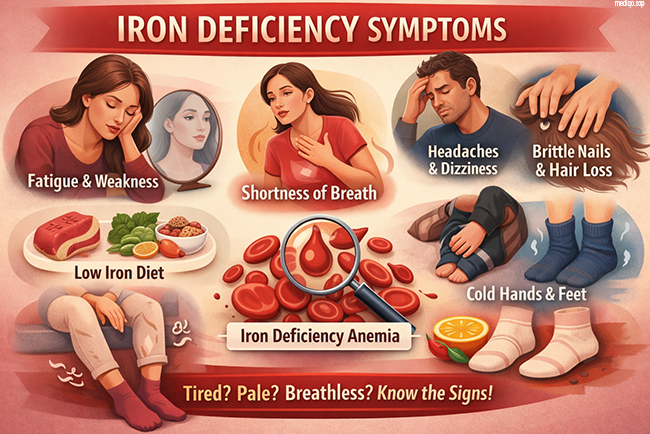
Persistent fatigue is one of the earliest iron deficiency symptoms. The body receives less oxygen when iron levels fall. As a result, muscles and tissues cannot produce enough energy.
People with iron deficiency often feel tired even after adequate rest. Daily tasks may seem more difficult than usual. Some individuals also experience reduced stamina during physical activities. This constant exhaustion can affect productivity and quality of life.
Another common sign of iron deficiency is pale skin. Hemoglobin gives blood its red color. When hemoglobin levels decrease, the skin may appear lighter or duller than usual.
This change often becomes noticeable on the face, gums, or inside the lower eyelids. In some cases, the skin may look slightly yellowish. Although pale skin alone does not confirm iron deficiency, it often appears alongside other symptoms.
Read more >> Tommy DeCarlo, Boston’s Lead Singer, Dies at 60
Shortness of breath can occur when the body lacks enough oxygen. Iron deficiency reduces the oxygen-carrying capacity of red blood cells. As a result, the lungs and heart work harder to compensate.
People may notice breathlessness during simple activities such as walking or climbing stairs. Some individuals also experience rapid breathing or discomfort during physical exertion. These symptoms often improve after iron levels return to normal.
Read more >> Anemia Symptoms in Women: Early Signs, Causes
Low iron levels can affect blood flow to the brain. This may lead to frequent headaches or feelings of dizziness. Many individuals also report lightheadedness when standing up quickly.
In severe cases, iron deficiency may cause fainting episodes. The brain requires a constant supply of oxygen to function properly. When oxygen delivery decreases, headaches and dizziness become more common.
Iron deficiency can also affect hair and nail health. Many people develop brittle or weak nails that break easily. Some nails may curve upward, a condition known as spoon-shaped nails.
Hair thinning or increased hair loss may also occur. Hair follicles require nutrients and oxygen for healthy growth. When iron levels drop, the hair growth cycle can become disrupted.
People with iron deficiency often feel unusually cold. Poor oxygen circulation can reduce body temperature regulation. As a result, hands and feet may feel cold even in warm environments.
This symptom often appears together with fatigue and weakness. Improving iron intake usually helps restore normal circulation and body warmth.
Some individuals with iron deficiency develop restless legs syndrome. This condition causes an uncomfortable urge to move the legs, especially during rest or sleep.
The sensation may feel like tingling, crawling, or itching inside the legs. Symptoms usually worsen at night and may disrupt sleep. Researchers believe iron plays an important role in brain chemicals that regulate movement.
A balanced diet helps prevent iron deficiency. Foods rich in iron include red meat, fish, poultry, beans, lentils, spinach, and fortified cereals. Vitamin C also improves iron absorption. Citrus fruits, tomatoes, and bell peppers are excellent sources.
In some cases, doctors recommend iron supplements. However, supplements should only be taken under medical supervision. Too much iron can also cause health problems.
Regular health checkups and blood tests help detect iron deficiency early. Early treatment reduces the risk of complications and improves overall wellbeing.
Iron deficiency symptoms often develop gradually. Fatigue, pale skin, dizziness, shortness of breath, and brittle nails are common warning signs. These symptoms indicate that the body may not receive enough oxygen.
Early recognition plays a crucial role in preventing iron deficiency anemia. A nutrient-rich diet and proper medical guidance can restore healthy iron levels. Paying attention to these symptoms helps maintain energy, health, and overall quality of life.