Physical Address
304 North Cardinal St.
Dorchester Center, MA 02124
Physical Address
304 North Cardinal St.
Dorchester Center, MA 02124

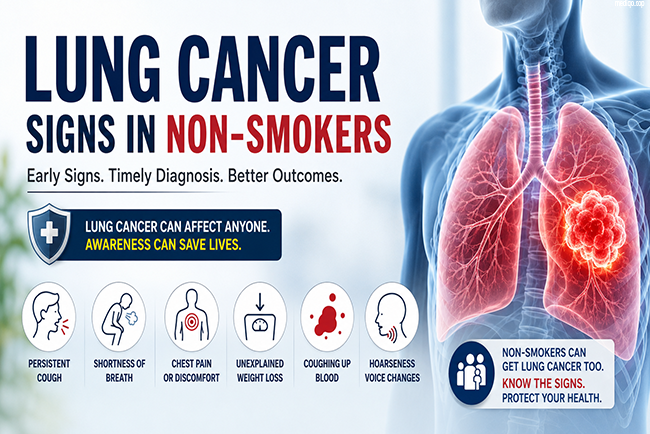
Lung cancer is often linked to smoking, but non-smokers can also develop it. In fact, a significant number of cases occur in people who have never smoked. These cases often go unnoticed until later stages because symptoms appear mild or similar to common respiratory issues.
Understanding early warning signs can help improve outcomes. Early detection increases treatment success and survival rates. This article explains key symptoms, risk factors, and when to seek medical help.
A long-lasting cough is one of the earliest signs of lung cancer in non-smokers. This cough may continue for weeks or even months without improvement.
It may start as a dry cough. Over time, it can become more intense or produce mucus. People often mistake it for allergies, cold, or asthma.
If a cough lasts longer than 3 weeks without clear improvement, it should not be ignored. A medical evaluation is important, especially if other symptoms appear.
Shortness of breath can appear even during light activity. This happens when tumors affect lung function or block airways.
Non-smokers may notice that they feel breathless while walking, climbing stairs, or doing simple tasks. This symptom often develops gradually.
Wheezing or noisy breathing may also occur. These signs are sometimes confused with asthma or bronchitis. However, persistent or worsening breathlessness requires medical attention.
Chest pain is another possible symptom. It may feel dull, sharp, or constant. The pain can worsen when breathing deeply, coughing, or laughing.
In some cases, the pain spreads to the shoulder or back. This happens when cancer affects surrounding tissues or nerves.
Many people ignore mild chest discomfort. However, ongoing pain without a clear cause should always be checked by a doctor.
Read more >> Early Breast Cancer Lump Symptoms: Key Signs to Know
Unintentional weight loss is a common warning sign of many cancers, including lung cancer. It may occur even without changes in diet or exercise.
Fatigue is also common. Patients often feel extremely tired even after rest. This happens because the body uses energy to fight abnormal cell growth.
When weight loss and fatigue occur together, they should not be ignored. A full medical evaluation is necessary.
Coughing up blood is a serious symptom. Even a small amount should be taken seriously.
Some patients may notice rust-colored or blood-stained mucus. This may indicate bleeding in the airways or lungs.
This symptom requires urgent medical attention. It is not normal and should never be delayed for evaluation.
Non-smokers with lung cancer may experience repeated infections such as pneumonia or bronchitis.
These infections may return frequently or take longer to heal than usual. Tumors can block air passages and trap bacteria.
If infections keep coming back in the same area of the lung, further investigation is needed.
A change in voice, especially hoarseness, can also be a warning sign. This happens when cancer affects nerves connected to the voice box.
The voice may sound weak, rough, or strained for a long time. If hoarseness lasts more than two weeks, it should be checked by a doctor.
Even without smoking, several factors can increase risk. These include:
Understanding these risks helps identify vulnerable individuals early.
Medical help should be sought if symptoms persist for more than a few weeks. Early screening and imaging tests such as X-rays or CT scans can detect problems early.
Do not wait for symptoms to become severe. Early diagnosis improves treatment options and outcomes significantly.
Lung cancer in non-smokers is often silent in its early stages. Symptoms can mimic common illnesses, which leads to delays in diagnosis.
Recognizing warning signs such as persistent cough, chest pain, and unexplained weight loss is crucial. Awareness and early medical evaluation can make a life-saving difference.