Physical Address
304 North Cardinal St.
Dorchester Center, MA 02124
Physical Address
304 North Cardinal St.
Dorchester Center, MA 02124

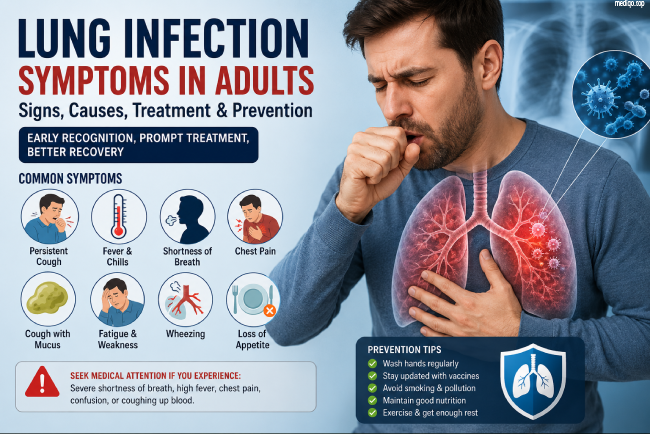
Lung infections are among the most common respiratory illnesses affecting adults worldwide. They can range from mild viral infections to severe bacterial pneumonia that requires immediate medical care. Early recognition of lung infection symptoms in adults allows faster diagnosis and treatment, reducing the risk of complications. Understanding the warning signs also helps patients seek medical attention before the condition worsens.
A lung infection occurs when bacteria, viruses, fungi, or other microorganisms invade the lungs and cause inflammation. The infection affects the airways or air sacs, making breathing difficult and reducing oxygen exchange. Common lung infections include pneumonia, bronchitis, and viral respiratory infections.
People with weakened immune systems, chronic lung disease, diabetes, or older age face a higher risk of developing serious lung infections.
Recognizing symptoms early is essential because many respiratory illnesses begin with mild complaints before becoming severe.
The most common symptoms include:
Some adults may experience only mild symptoms at first. Others develop severe breathing difficulty within a short period, especially if pneumonia is present.
Certain symptoms suggest a serious lung infection that requires urgent medical evaluation.
Seek emergency care if you experience:
Prompt treatment can prevent respiratory failure and other life-threatening complications.
Several microorganisms can infect the lungs.
Common causes include:
Environmental pollution and poor indoor air quality may also increase the risk of respiratory infections.
Diagnosis begins with reviewing symptoms and performing a physical examination. Healthcare providers listen to abnormal lung sounds using a stethoscope.
Additional tests may include:
These investigations help identify the cause and determine the most effective treatment.
Treatment depends on the underlying cause and the severity of the infection.
Most viral infections improve with supportive care, including:
Antiviral medications may be recommended for influenza or certain other viral illnesses.
Doctors usually prescribe antibiotics for confirmed bacterial infections. Completing the full course is important, even if symptoms improve early.
Read more >> Shortness of Breath at Rest: Causes and Warning Signs
Severe infections may require:
Early treatment generally leads to better recovery.
Untreated lung infections can lead to serious health problems.
Potential complications include:
Individuals with chronic illnesses face a greater risk of these complications.
Simple lifestyle habits can significantly lower the risk of respiratory infections.
Helpful prevention strategies include:
Strong immunity and healthy lungs provide better protection against infections.
Contact a healthcare provider if your cough lasts longer than three weeks, breathing becomes difficult, fever persists, or symptoms continue to worsen. People over 65 years of age, pregnant women, and individuals with chronic lung or heart disease should seek medical advice early because they are more vulnerable to severe illness.
Recognizing lung infection symptoms in adults is the first step toward timely treatment and better outcomes. Persistent cough, fever, chest pain, fatigue, and shortness of breath should never be ignored. While many mild infections improve with supportive care, bacterial infections often require antibiotics, and severe cases may need hospitalization. Maintaining healthy lifestyle habits, receiving recommended vaccinations, and seeking prompt medical attention when symptoms become serious can greatly reduce the risk of complications and support long-term respiratory health.