Physical Address
304 North Cardinal St.
Dorchester Center, MA 02124
Physical Address
304 North Cardinal St.
Dorchester Center, MA 02124

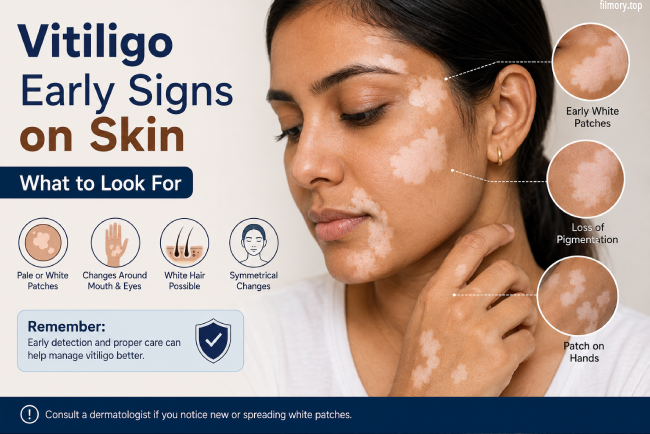
Vitiligo is a skin condition that causes areas of the skin to lose their natural color. It happens when melanocytes, the cells that produce melanin, are damaged or destroyed. Melanin gives skin its color. Vitiligo can affect people of any skin tone and may appear at any age. Early changes can sometimes be subtle, making them difficult to recognize.
One of the earliest signs of vitiligo is a small area of lighter skin. The patch may initially look slightly paler than the surrounding skin. Over time, it can become completely white. These spots may appear on the hands, face, arms, feet, or other areas of the body.
Vitiligo patches often have noticeable borders. The affected skin can contrast strongly with nearby normal skin, especially in people with darker skin tones. However, the appearance can vary between individuals. Early patches may not always have a sharply defined edge.
Vitiligo often develops on both sides of the body. For example, similar patches may appear on both hands or around both eyes. This pattern is known as non-segmental vitiligo. However, not everyone develops symmetrical patches.
Loss of pigment can sometimes affect hair growing in an area with vitiligo. Hair on the scalp, eyebrows, eyelashes, or beard may become white or gray. This change can occur before or after visible skin patches develop.
The skin around the mouth, nose, and eyes can be affected during the early stages of vitiligo. Fingers and other areas with frequent friction may also develop depigmented patches. These locations can make early changes easier to notice.
Vitiligo itself usually does not cause severe pain or itching. However, some people may notice mild itching or irritation when new patches are developing. Other skin conditions can also cause pale or white patches with itching. Therefore, itching should not be used alone to identify vitiligo.
Read more >> Acne Breakouts: Hormonal Causes Explained
Several skin conditions can cause lighter patches. Fungal infections, eczema, post-inflammatory changes, and certain pigment disorders may look similar to early vitiligo. A dermatologist can examine the skin and determine the likely cause. A Wood’s lamp examination may also help highlight areas of pigment loss.
Consider seeing a dermatologist if you notice new white or progressively lighter patches on your skin. Professional evaluation is especially important when the patches continue to spread or appear in multiple areas. A dermatologist may examine your medical history and skin before making a diagnosis.
Vitiligo can remain stable for long periods or gradually spread to additional areas. Some people develop only a few small patches, while others experience more extensive pigment loss. The course is unpredictable. Early evaluation can help identify the condition and discuss appropriate management options.
There is currently no guaranteed permanent cure for vitiligo, but several treatments can help restore or improve skin color. Depending on the type and extent of vitiligo, options may include topical corticosteroids, topical calcineurin inhibitors, phototherapy, or other specialist treatments. Treatment should be selected with guidance from a qualified dermatologist.
Areas affected by vitiligo contain less melanin and can burn more easily in sunlight. Use broad-spectrum sunscreen and consider protective clothing when spending time outdoors. Avoiding sunburn is important because damaged skin may become more noticeable and can complicate skin care.
The early signs of vitiligo on skin often include small pale or white patches, clearly noticeable pigment changes, and loss of color around areas such as the hands, face, eyes, and mouth. White patches can have many causes, so self-diagnosis is not recommended. If you notice unexplained or spreading pigment loss, consult a dermatologist for an accurate assessment and personalized advice.