Physical Address
304 North Cardinal St.
Dorchester Center, MA 02124
Physical Address
304 North Cardinal St.
Dorchester Center, MA 02124

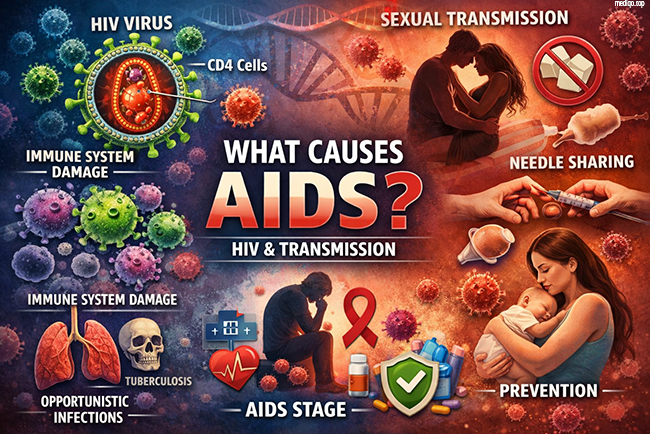
AIDS stands for Acquired Immunodeficiency Syndrome. It represents the most advanced stage of HIV infection. HIV attacks the immune system and weakens the body’s defense against disease. Without treatment, HIV can progress to AIDS over time. Understanding what causes AIDS helps people prevent infection and seek early care.
HIV is the only direct cause of AIDS. The virus targets CD4 cells, which protect the body from infections. As HIV multiplies, it destroys these cells steadily. When CD4 levels fall very low, the immune system becomes severely damaged. At this stage, doctors diagnose AIDS.
HIV spreads through specific body fluids. These fluids include blood, semen, vaginal fluids, rectal fluids, and breast milk. The virus enters the body through mucous membranes or open wounds. It can also enter directly into the bloodstream. Casual contact does not spread HIV.
Read more >> Eczema Symptoms: Signs, Causes, and Effective Management Tips
Unprotected sexual contact is a leading cause of HIV infection worldwide. The virus passes during vaginal, anal, or oral sex with an infected person. Risk increases when condoms are not used correctly. Having multiple partners also raises exposure chances. Regular testing helps reduce unnoticed transmission.
HIV can spread through contact with infected blood. Sharing needles or syringes is a high-risk activity. This often occurs during injectable drug use. Unsafe blood transfusions can also transmit HIV, though screening has reduced this risk. Using sterile medical equipment prevents blood-based transmission.
A mother with HIV can pass the virus to her child. Transmission may happen during pregnancy, childbirth, or breastfeeding. Medical treatment greatly lowers this risk today. Proper care allows many HIV-positive mothers to have healthy babies. Early testing during pregnancy remains essential.
Not everyone with HIV develops AIDS quickly. Without treatment, HIV slowly damages the immune system. Opportunistic infections then begin to appear. These infections signal severe immune weakness. When certain conditions develop, doctors confirm an AIDS diagnosis.
AIDS allows rare infections and cancers to thrive. Examples include tuberculosis, pneumonia, and certain fungal infections. Some cancers, like Kaposi’s sarcoma, also appear more often. These illnesses rarely affect healthy immune systems. Their presence indicates advanced immune damage.
Several factors can accelerate HIV progression. These include lack of treatment, poor nutrition, and co-existing infections. Substance abuse may also weaken immunity further. Early diagnosis and consistent care slow disease progression. Lifestyle choices play a supportive role in health outcomes.
Preventing HIV prevents AIDS completely. Safe sex practices reduce sexual transmission significantly. Never sharing needles protects against blood exposure. Pregnant women benefit from early HIV screening and treatment. Education remains one of the strongest prevention tools.
AIDS develops only because of untreated or advanced HIV infection. HIV damages the immune system until it cannot fight infections. Understanding transmission routes helps people stay protected. Early testing and treatment save lives. Awareness remains key in stopping the spread of AIDS.