Physical Address
304 North Cardinal St.
Dorchester Center, MA 02124
Physical Address
304 North Cardinal St.
Dorchester Center, MA 02124

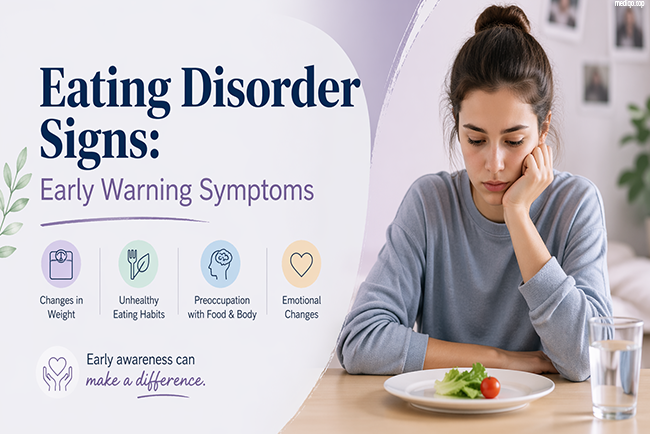
Eating disorders are serious mental health conditions that affect eating behaviors, emotions, and physical health. They can develop gradually and often remain hidden in the early stages. Recognizing eating disorder signs early helps prevent long-term health complications and supports timely intervention. These signs may appear in behavior, emotions, or the body, and they often overlap.
Behavioral changes are often the most noticeable early indicators. A person may suddenly change how they eat or behave around food. They may skip meals frequently or avoid eating in social situations. Some individuals start following strict food rules or develop unusual eating rituals, such as cutting food into very small pieces or eating extremely slowly.
Another common sign is frequent dieting or obsession with “clean” or “healthy” eating that becomes extreme. People may also hide food, lie about eating, or disappear after meals. In some cases, there is evidence of binge eating, followed by attempts to compensate through fasting or excessive exercise.
These behaviors are not always obvious at first, but they tend to become more repetitive over time.
Eating disorder signs often include emotional and psychological changes. A person may develop an intense fear of gaining weight or become highly focused on body image. Self-esteem may become strongly tied to appearance or weight rather than personal qualities or achievements.
Mood changes are also common. Anxiety, irritability, guilt after eating, or depression may appear. Many individuals experience feelings of loss of control, especially around food. They may also become withdrawn and avoid conversations about eating habits or body image.
Perfectionism is another key indicator. A person may set extremely high standards for themselves and feel distressed when they cannot meet them, especially regarding diet or body shape.
Read more >> Insomnia Causes: Main Reasons You Cannot Sleep and How It Happens
Physical symptoms often appear as the condition progresses. Sudden weight loss or weight fluctuations may be noticeable. However, not all eating disorders involve visible weight changes, so absence of weight loss does not rule out a problem.
Other physical signs include fatigue, dizziness, or feeling cold more often than usual. Hair thinning, dry skin, and brittle nails can also develop due to nutritional deficiencies. Digestive issues such as constipation or stomach pain are also common.
In more severe cases, hormonal changes may occur, such as missed menstrual periods. These symptoms indicate that the body is not receiving adequate nutrition.
Social behavior often changes alongside eating disorder signs. A person may begin avoiding meals with family or friends. They might isolate themselves more frequently or lose interest in activities they once enjoyed.
Exercise habits may also become extreme. Instead of being a healthy activity, exercise can become a rigid routine driven by guilt or the need to “burn calories.” This can interfere with daily life, school, or work responsibilities.
Additionally, individuals may show increased secrecy. They might avoid discussions about food, hide their eating habits, or become defensive when questioned.
It is important to take eating disorder signs seriously, even if they appear mild at first. Early recognition improves the chances of recovery and reduces health risks. If several signs appear together—especially changes in eating habits, mood, and physical health—it may indicate a deeper issue.
Support from trusted individuals and mental health professionals can make a significant difference. Eating disorders are treatable, and recovery is possible with the right care and understanding.
Eating disorder signs can appear in many forms, including behavioral changes, emotional distress, physical symptoms, and social withdrawal. They often develop gradually and may be easy to overlook in the beginning. Paying attention to these early warning signals helps ensure timely support and better long-term health outcomes.