Physical Address
304 North Cardinal St.
Dorchester Center, MA 02124
Physical Address
304 North Cardinal St.
Dorchester Center, MA 02124

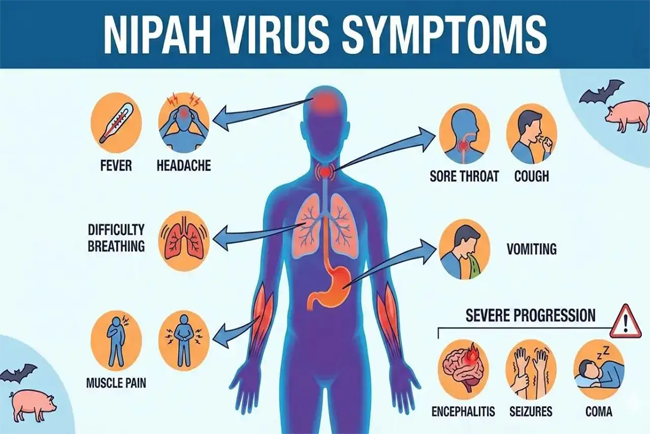
The Nipah virus infection is a serious viral illness that can affect both humans and animals. First identified in Malaysia in 1998, this disease has since caused outbreaks in several regions, including Bangladesh and India. Understanding Nipah virus symptoms, causes, and prevention methods is essential to protect public health and reduce the risk of infection.
Nipah virus is a zoonotic virus, meaning it spreads from animals to humans. It belongs to the Henipavirus genus and is considered highly dangerous due to its high fatality rate. The natural hosts of this virus are fruit bats, also known as flying foxes.
Outbreaks of Nipah virus infection often occur in rural areas where people have close contact with animals or consume contaminated food products such as raw date palm sap.
Recognizing Nipah virus symptoms early can help reduce severe complications. Symptoms usually appear 4 to 14 days after exposure.
Symptoms can worsen quickly, making immediate medical attention extremely important.
The primary cause of Nipah virus infection is exposure to infected animals or contaminated food. Human-to-human transmission is also possible.
Read more>>Marburg Virus Disease: Symptoms, Causes, Prevention, and Treatment
Understanding how the Nipah virus spreads helps communities take preventive steps to reduce outbreaks.
There is currently no specific vaccine available for Nipah virus infection. However, prevention measures can significantly reduce the risk of infection.
Public awareness and community education are key to preventing the spread of Nipah virus.
There is no specific antiviral treatment approved for Nipah virus infection. Treatment mainly focuses on supportive care to manage symptoms and prevent complications.
Early diagnosis and supportive medical care can improve survival chances.
Nipah virus infection is considered highly dangerous because of its high mortality rate, which can range from 40% to 75% depending on the outbreak. The virus can also spread quickly in healthcare settings without proper infection control.
In regions like Bangladesh, seasonal outbreaks are often linked to the consumption of contaminated palm sap. This makes community awareness especially important.
The Nipah virus remains a serious global health concern due to its rapid spread and severe symptoms. Understanding Nipah virus symptoms, causes, transmission, and prevention methods is crucial for reducing outbreaks and saving lives. By practicing proper hygiene, avoiding risky foods, and seeking early medical care, individuals can help protect themselves and their communities.
Fruit bats are the natural carriers and primary source of Nipah virus infection.
Yes, it can spread through close contact with infected individuals and bodily fluids.
Currently, there is no approved vaccine available for Nipah virus.
Avoid raw date palm sap, maintain hygiene, and avoid contact with infected animals or people.
Read More>>Karuppu (2026) Movie Preview