Physical Address
304 North Cardinal St.
Dorchester Center, MA 02124
Physical Address
304 North Cardinal St.
Dorchester Center, MA 02124
Ovarian cysts are fluid-filled sacs that develop on or inside an ovary. Many cysts are harmless and disappear without treatment. However, some cysts can cause noticeable symptoms, especially when they become large, rupture, or twist the ovary.
Understanding the ovarian cyst symptoms pain location can help you recognize when discomfort may need medical evaluation.
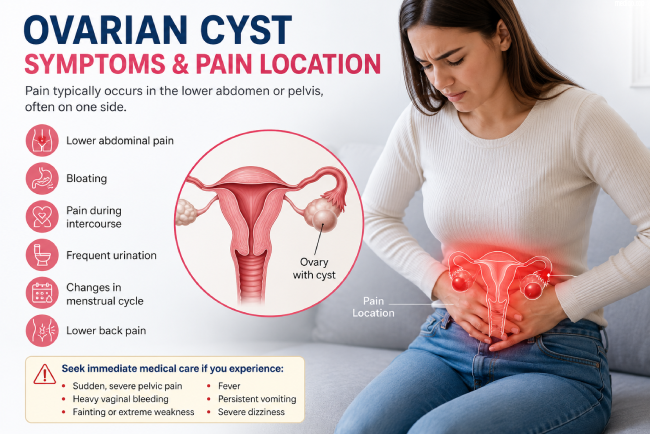
Ovarian cyst pain usually occurs in the lower abdomen or pelvic area. The pain may appear on the left or right side, depending on which ovary has the cyst.
Common pain locations include:
The pain can be mild and intermittent. It may also become sharper during physical activity, intercourse, or certain movements.
Not every ovarian cyst causes symptoms. When symptoms develop, they can include pelvic pressure, abdominal bloating, fullness, or discomfort.
Other possible symptoms include:
These symptoms can also occur with other gynecological or digestive conditions. Therefore, symptoms alone cannot confirm an ovarian cyst.
A ruptured cyst may cause sudden and sharp pelvic or abdominal pain. Some people may also experience vaginal bleeding, abdominal discomfort, dizziness, or weakness.
A ruptured cyst does not always cause a medical emergency. However, significant bleeding or severe symptoms can require immediate treatment.
Read more >> Hormonal Imbalance, Acne & Weight Gain: Key Causes
Seek urgent medical attention if you experience sudden, severe pelvic or abdominal pain, especially when it occurs with other concerning symptoms.
Warning signs can include:
These symptoms can occur with complications such as ovarian torsion or significant internal bleeding. Prompt evaluation is important because ovarian torsion can reduce blood flow to the ovary.
A healthcare professional may review your symptoms and menstrual history and perform a pelvic examination. An ultrasound is commonly used to examine the ovaries and determine the cyst’s size and appearance.
Depending on the findings, additional tests or follow-up examinations may be recommended.
Treatment depends on factors such as the cyst’s appearance, size, symptoms, age, and whether complications are suspected. Many simple cysts are monitored because they may resolve naturally.
The typical ovarian cyst pain location is the lower abdomen or pelvis, often on one side. Pain can sometimes spread to the lower back or become noticeable during sex, bowel movements, or urination.
Mild symptoms do not necessarily indicate a serious problem. However, sudden or severe pelvic pain, fainting, heavy bleeding, fever, or persistent vomiting should be evaluated urgently. If pelvic pain continues or repeatedly returns, consult a healthcare professional for an accurate diagnosis.