Physical Address
304 North Cardinal St.
Dorchester Center, MA 02124
Physical Address
304 North Cardinal St.
Dorchester Center, MA 02124

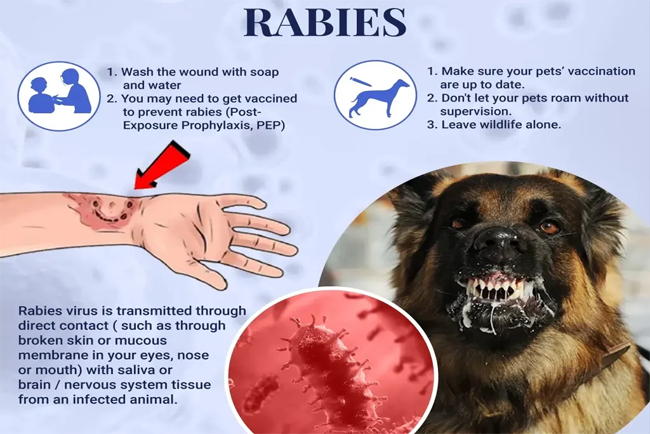
Rabies is a deadly viral disease that affects both humans and animals. It spreads mainly through the bite or scratch of an infected animal. Although rabies is preventable, it remains a serious public health concern in many countries. Understanding the causes, symptoms, prevention, and treatment of rabies can help save lives.
Rabies is a viral disease that attacks the nervous system and brain. It is caused by the rabies virus, which belongs to the Lyssavirus group. The virus spreads through saliva from infected animals, most commonly through bites.
Dogs are responsible for most rabies cases worldwide, especially in developing countries. However, other animals such as cats, bats, foxes, and monkeys can also carry the virus.
Rabies occurs when the virus enters the body through broken skin or mucous membranes. The main causes include:
The virus travels through nerves to the brain, where it causes inflammation and severe damage.
Rabies symptoms usually appear 1 to 3 months after exposure, but this period can vary. Early detection is critical because rabies becomes fatal once symptoms develop.
Read More>>Nipah Virus: Symptoms, Causes, Prevention, and Treatment Guide
Without treatment, rabies almost always leads to death.
Doctors diagnose rabies based on:
Early diagnosis is essential to begin life-saving treatment.
If someone is bitten or scratched by an animal, immediate action is crucial. Follow these steps:
Post-exposure prophylaxis (PEP) can prevent rabies if given quickly after exposure.
Preventing rabies is easier than treating it. Here are effective prevention methods:
Community vaccination programs are also important for controlling rabies outbreaks.
Animals infected with rabies may show unusual behavior. Common signs include:
If you suspect an animal has rabies, avoid contact and inform local authorities immediately.
Rabies remains a major health threat in many regions, especially in rural areas. Increasing awareness about rabies prevention and early treatment can significantly reduce deaths. Education, vaccination, and responsible pet ownership are key to eliminating rabies worldwide.
Rabies is a dangerous but preventable disease. Knowing the symptoms, causes, prevention methods, and treatment options for rabies can help protect you and your family. Always seek medical attention after any animal bite, and ensure pets receive regular vaccinations to reduce the risk of rabies infection.
Read More>>Leviticus (2026) Movie Preview