Physical Address
304 North Cardinal St.
Dorchester Center, MA 02124
Physical Address
304 North Cardinal St.
Dorchester Center, MA 02124

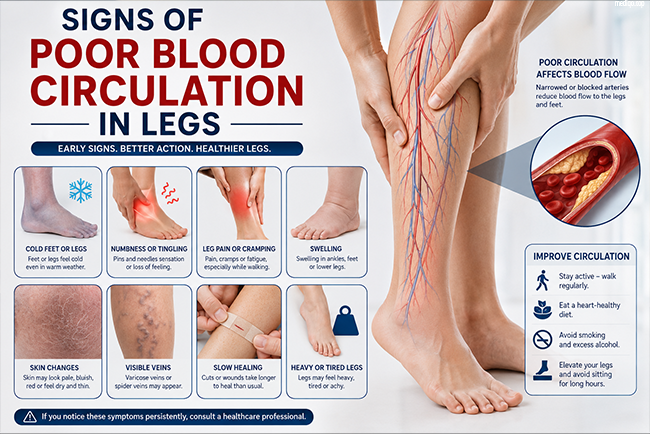
Poor blood circulation in the legs occurs when blood flow becomes restricted or slowed. This condition can affect daily comfort and long-term health. It often develops gradually, so early signs are easy to ignore. Healthy circulation is important because it delivers oxygen and nutrients to tissues. When blood flow decreases, the legs may show discomfort, color changes, or weakness. Recognizing symptoms early helps prevent complications and supports better vascular health.
One of the earliest signs of poor leg circulation is a persistent cold feeling in the feet or lower legs. This happens when enough warm, oxygen-rich blood does not reach the area. Even in warm environments, the feet may feel unusually cold. Some people also notice that one leg feels colder than the other. This symptom often becomes more noticeable during rest or at night. It is a warning sign that blood flow may be restricted in the arteries.
Numbness or tingling sensations in the legs are common indicators of reduced circulation. These sensations may feel like “pins and needles” and can come and go. Weak blood flow limits oxygen supply to nerves, which leads to reduced sensitivity. In some cases, walking long distances may become difficult due to leg fatigue. The muscles may feel weak even after light activity. These symptoms should not be ignored, especially if they become frequent or worsen over time.
Changes in skin color and texture can also signal circulation problems. The skin may appear pale, bluish, or even reddish in some cases. Poor circulation can also make the skin dry, thin, or shiny. Another important sign is slow healing of cuts or wounds on the legs and feet. When blood flow is reduced, the body struggles to repair damaged tissue. This increases the risk of infection and other complications, especially in the lower limbs.
Read more >> Early Cholesterol Symptoms in the Body: Warning Signs
Leg pain during walking or physical activity is a strong sign of poor circulation. This condition is often called intermittent claudication. The pain usually eases with rest but returns when activity resumes. Muscle cramps may also occur, especially at night. Some people describe a heavy or tired feeling in their legs after short periods of standing or walking. These symptoms suggest that the muscles are not receiving enough oxygen during movement.
Swelling in the legs and ankles can occur when blood flow becomes inefficient. Fluid may build up in the lower limbs due to poor circulation. This condition can make shoes feel tight and cause discomfort throughout the day. In some cases, enlarged or twisted veins, known as varicose veins, may appear. These veins indicate that blood is not returning properly to the heart. Swelling should be monitored carefully, especially if it becomes persistent.
Several factors contribute to poor circulation in the legs. Sedentary lifestyle, obesity, smoking, and diabetes are common causes. High blood pressure and high cholesterol can also damage blood vessels over time. Aging naturally reduces circulation efficiency as well. In some cases, conditions like peripheral artery disease can significantly restrict blood flow. Understanding these risks helps in taking early preventive action.
Improving circulation often starts with simple lifestyle changes. Regular exercise such as walking helps strengthen blood flow in the legs. Staying hydrated supports healthy blood vessel function. A balanced diet rich in fruits, vegetables, and healthy fats can improve vascular health. Avoiding long periods of sitting or standing also reduces pressure on the legs. In some cases, medical treatment may be required if symptoms are severe or persistent.