Physical Address
304 North Cardinal St.
Dorchester Center, MA 02124
Physical Address
304 North Cardinal St.
Dorchester Center, MA 02124

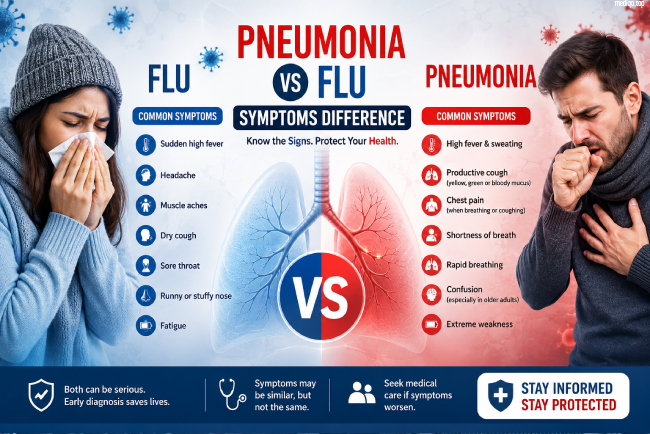
Many people confuse pneumonia with the flu because both illnesses affect the respiratory system. They often begin with similar symptoms, including fever, cough, fatigue, and body aches. However, the pneumonia vs flu symptoms difference becomes more noticeable as the illness progresses. Recognizing these differences helps patients seek timely treatment and avoid serious complications.
Influenza is a viral infection that mainly affects the nose, throat, and airways. Pneumonia is an infection that inflames the air sacs in one or both lungs. Those air sacs may fill with fluid or pus, making breathing more difficult. While influenza usually resolves within one to two weeks, pneumonia can become life-threatening without proper medical care.
Although both conditions involve infections, their causes differ.
Influenza results from influenza viruses, especially influenza A and B. It spreads easily through respiratory droplets when an infected person coughs, sneezes, or talks.
Pneumonia has several causes. Bacteria, viruses, fungi, and even aspiration of food or liquids into the lungs may trigger the infection. Bacterial pneumonia, particularly from Streptococcus pneumoniae, remains one of the most common and severe forms.
Sometimes influenza weakens the immune system and damages lung tissue. As a result, bacterial pneumonia develops as a secondary infection after the flu.
Understanding symptom patterns is the easiest way to distinguish these illnesses.
Flu symptoms usually appear suddenly. Common signs include:
Most healthy adults begin feeling better after several days, although fatigue may last longer.
Pneumonia symptoms often become more severe than flu symptoms. They may include:
Unlike influenza, pneumonia often causes noticeable breathing difficulties because the infection directly affects the lungs.
Read more >> Chronic Bronchitis Cough Symptoms: Signs, Causes & Relief
Several symptoms should raise concern that influenza may have progressed to pneumonia.
These warning signs include:
Anyone experiencing these signs should seek immediate medical evaluation.
Diagnosis begins with a physical examination and medical history.
Healthcare providers often diagnose influenza using rapid flu tests or PCR testing.
Pneumonia usually requires additional evaluation because the lungs are involved. Doctors may recommend:
These tests help identify the infection and determine the most appropriate treatment.
Treatment depends on the underlying cause.
Influenza often improves with rest, hydration, fever-reducing medication, and antiviral drugs if started within the first 48 hours.
Pneumonia treatment varies according to the type of infection.
Early treatment significantly lowers the risk of serious complications.
Certain individuals face a higher risk of developing severe pneumonia after influenza.
High-risk groups include:
These individuals should monitor flu symptoms carefully and seek medical attention if breathing problems develop.
Preventing respiratory infections remains the best strategy.
You can reduce your risk by:
Vaccination provides one of the strongest defenses against serious illness.
Do not ignore symptoms that continue to worsen.
Seek medical care immediately if you experience:
Prompt evaluation can prevent complications such as respiratory failure or sepsis.
Knowing the pneumonia vs flu symptoms difference can make a significant difference in health outcomes. Influenza often causes sudden fever, body aches, and fatigue, while pneumonia commonly produces chest pain, persistent productive cough, and breathing difficulty. Although both illnesses share similar early symptoms, pneumonia generally becomes more severe and requires closer medical attention.
If symptoms worsen, especially breathing problems or chest discomfort, seek professional medical care without delay. Early diagnosis and appropriate treatment greatly improve recovery and reduce the risk of complications. Staying up to date with vaccinations, maintaining healthy habits, and recognizing warning signs remain the most effective ways to protect yourself and your family from serious respiratory infections.