Physical Address
304 North Cardinal St.
Dorchester Center, MA 02124
Physical Address
304 North Cardinal St.
Dorchester Center, MA 02124

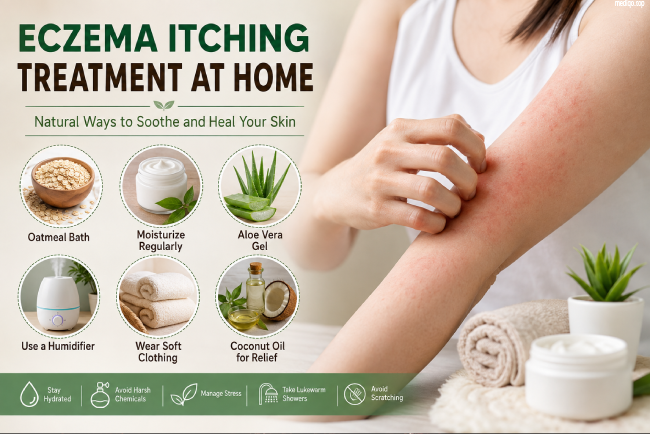
Eczema is a chronic skin condition that affects millions of people worldwide. It often causes dry, inflamed, and itchy skin that can interfere with daily life and sleep. The urge to scratch may become overwhelming, but scratching usually worsens the irritation. It can also damage the skin barrier and increase the risk of infection.
Fortunately, many people can reduce itching by following simple home care practices. While these remedies do not cure eczema, they often help manage symptoms and improve comfort between medical treatments.
Keeping the skin hydrated is one of the most effective home treatments for eczema itching. A healthy moisturizer helps repair the skin barrier and reduces dryness that triggers itching.
Choose fragrance-free creams or ointments instead of scented lotions. Thick moisturizers usually provide better protection because they create a barrier that locks in moisture.
Apply moisturizer immediately after bathing while the skin is still slightly damp. Repeat the application throughout the day whenever the skin feels dry.
Hot water removes natural oils from the skin and may worsen eczema symptoms. Instead, take a lukewarm bath for about 10 to 15 minutes.
You may add colloidal oatmeal or baking soda to the bath to help calm irritated skin. These ingredients can provide temporary itch relief for some people.
After bathing, gently pat your skin dry with a soft towel. Avoid rubbing because it may irritate sensitive skin. Apply moisturizer within three minutes to seal in hydration.
A cool compress offers quick relief during an eczema flare-up. Wrap ice or a cold pack in a clean cloth and place it on the itchy area for 10 to 15 minutes.
The cooling sensation helps reduce inflammation and temporarily numbs the skin. Never place ice directly on the skin because it can cause damage.
This method works well before bedtime when itching becomes more noticeable.
Many soaps, shampoos, and detergents contain harsh chemicals that may trigger eczema flare-ups.
Use fragrance-free cleansers designed for sensitive skin. Wash clothes with mild, dye-free detergent and avoid fabric softeners if they irritate your skin.
Wear soft cotton clothing whenever possible. Wool and synthetic fabrics can trap heat and increase itching.
Read more >> Chronic Cough Causes Without Fever: Symptoms & Treatment
Scratching creates a harmful cycle. It damages the skin, causes more inflammation, and leads to even greater itching.
Keep fingernails trimmed short to reduce skin injury. Wearing cotton gloves at night may help children and adults avoid unconscious scratching while sleeping.
If itching becomes severe, gently press or tap the itchy area instead of scratching it.
Every person has different eczema triggers. Learning what causes your flare-ups is an important step toward better symptom control.
Common triggers include:
Keeping a symptom diary can help identify patterns and prevent future flare-ups.
Stress does not directly cause eczema, but it often makes symptoms worse.
Simple relaxation techniques may help reduce itching episodes. Deep breathing exercises, meditation, light yoga, and regular physical activity support both mental well-being and skin health.
Good sleep habits also improve the body’s natural healing process.
Indoor humidity plays an important role in eczema management. Dry air removes moisture from the skin and increases irritation.
Using a humidifier during dry seasons may help maintain comfortable humidity levels. Clean the humidifier regularly to prevent mold growth.
Keep your home cool because excessive heat often increases itching.
Home treatment works best for mild eczema symptoms. However, medical evaluation becomes important if:
A healthcare professional may recommend prescription creams, oral medications, or newer biologic treatments depending on the severity of the condition.
Finding an effective eczema itching treatment at home often requires a combination of moisturizing, gentle skincare, trigger avoidance, and healthy lifestyle habits. Consistency is more important than trying many different remedies at once.
While home care can greatly improve comfort, persistent or severe eczema should always be evaluated by a healthcare provider. Early treatment helps protect the skin barrier, reduces flare-ups, and improves long-term quality of life.