Physical Address
304 North Cardinal St.
Dorchester Center, MA 02124
Physical Address
304 North Cardinal St.
Dorchester Center, MA 02124

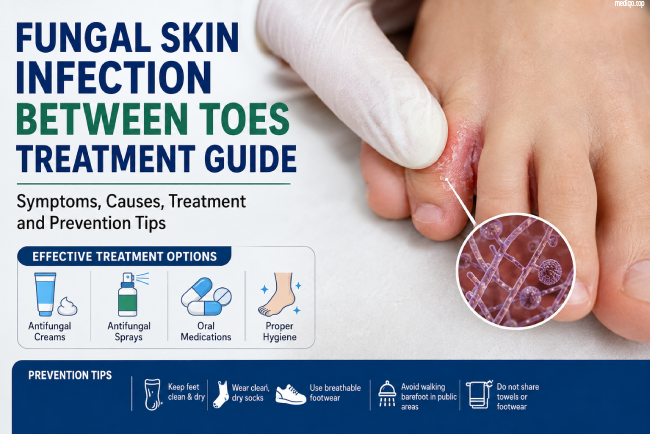
A fungal skin infection between the toes is one of the most common foot problems worldwide. The condition, often called athlete’s foot, develops when fungi grow in warm, moist areas of the feet. People who wear closed shoes for long hours, sweat excessively, or walk barefoot in public places face a higher risk. Fortunately, early diagnosis and proper fungal skin infection between toes treatment can relieve symptoms quickly and prevent recurrence.
This guide explains the causes, symptoms, treatment options, home care, and prevention methods to help you keep your feet healthy.
Fungi called dermatophytes are the primary cause of this infection. These organisms thrive in damp environments and spread through direct skin contact or contaminated surfaces.
Common risk factors include:
The infection usually begins between the fourth and fifth toes because moisture easily becomes trapped in this area.
Early detection improves treatment success. Symptoms often become more noticeable if the infection remains untreated.
Common signs include:
If the fungus spreads, it may affect the soles, sides of the feet, or even the toenails.
Most mild infections respond well to over-the-counter antifungal medications.
Effective treatment options include:
Creams containing terbinafine, clotrimazole, miconazole, or butenafine help eliminate the fungus. Apply the medication exactly as directed, even after symptoms improve. Completing the full course reduces the chance of recurrence.
Read more >> Psoriasis Flare-Up Causes: Common Triggers You Should Know
These products help keep the feet dry while treating fungal growth. They work particularly well for people with excessive sweating.
Doctors may prescribe oral antifungal medications for severe, widespread, or recurring infections. These medicines usually require medical supervision because they may interact with other drugs or affect liver function.
Medication works best when combined with good hygiene practices. Wash your feet daily using mild soap and water, then dry carefully between each toe before putting on socks.
Home care supports medical treatment and speeds recovery.
Follow these practical tips:
Some natural remedies, such as diluted tea tree oil, may offer mild antifungal benefits. However, scientific evidence remains limited, so they should not replace proven medical treatments.
Prevention is often easier than repeated treatment.
Reduce your risk by:
These habits greatly reduce fungal growth and protect your skin.
Although many infections improve with over-the-counter treatment, medical evaluation becomes important in certain situations.
Consult a healthcare provider if:
Prompt treatment helps prevent complications such as bacterial skin infections.
Yes. The fungus spreads through direct contact with infected skin or contaminated surfaces like floors, towels, and shoes.
Most mild infections improve within two to four weeks when treated consistently.
Yes. Recurrence is common if feet remain warm and moist or treatment stops too early.
Home remedies may provide temporary relief but should not replace antifungal medications recommended by healthcare professionals.
A fungal skin infection between the toes is uncomfortable but highly treatable. Early recognition, consistent use of antifungal medication, and excellent foot hygiene usually eliminate the infection within a few weeks. Prevention also plays an essential role in avoiding future outbreaks. If symptoms persist, worsen, or frequently recur, seek medical advice for a complete evaluation and personalized treatment plan.
By following proper foot care habits and completing the recommended treatment, you can maintain healthy, comfortable feet and significantly reduce the risk of future fungal infections.