Physical Address
304 North Cardinal St.
Dorchester Center, MA 02124
Physical Address
304 North Cardinal St.
Dorchester Center, MA 02124
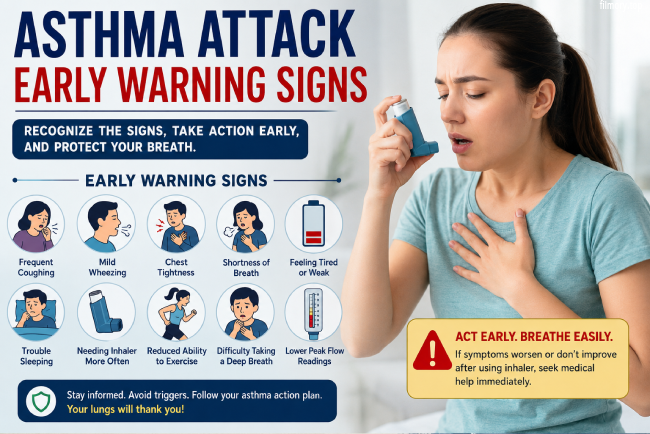
Asthma affects millions of people worldwide and remains one of the most common chronic respiratory conditions. Many asthma attacks do not happen suddenly. The body often sends subtle warning signals hours or even days before breathing becomes severely restricted. Recognizing these asthma attack early warning signs can help you act quickly, prevent serious complications, and reduce the need for emergency treatment.
In this article, you’ll learn how to identify the earliest signs of an asthma attack, understand common triggers, and know when immediate medical attention becomes necessary.
An asthma attack occurs when the airways become inflamed, swollen, and narrowed. The muscles surrounding the airways tighten while excess mucus develops inside the lungs. Together, these changes make breathing difficult and reduce the amount of oxygen reaching the body.
Although attacks vary in severity, early intervention often prevents them from becoming life-threatening.
Many people experience subtle symptoms before a full asthma attack develops. Paying attention to these warning signs allows you to follow your asthma action plan before symptoms worsen.
Common early warning signs include:
These symptoms may appear gradually over several hours or even a few days.
Ignoring early symptoms can allow the attack to progress rapidly. As airway narrowing increases, breathing becomes significantly harder.
Watch for these warning signs:
These symptoms require immediate attention and should never be ignored.
Read more >> Pancreatitis Warning Signs in Adults: Key Symptoms
Understanding your personal asthma triggers is one of the best ways to prevent future attacks.
Common triggers include:
Keeping a symptom diary may help identify patterns and reduce future exposure.
Early action often prevents symptoms from becoming severe. Follow the asthma action plan provided by your healthcare provider.
Helpful steps include:
If symptoms continue despite using your rescue inhaler, seek medical evaluation without delay.
Some asthma attacks become life-threatening within minutes. Emergency care is necessary if you experience:
Call emergency medical services immediately if these symptoms occur.
Long-term asthma control depends on consistent management and healthy habits.
You can lower your risk by:
Regular communication with your healthcare provider helps ensure your treatment plan remains effective.
Recognizing asthma attack early warning signs can make the difference between a manageable flare-up and a medical emergency. Nighttime coughing, increasing shortness of breath, chest tightness, and frequent inhaler use should never be overlooked. Early treatment often prevents severe attacks and protects long-term lung function.
If you or a loved one lives with asthma, develop a personalized asthma action plan, understand your triggers, and respond immediately when early symptoms appear. Staying informed and prepared is one of the most effective ways to breathe easier and live confidently with asthma.