Physical Address
304 North Cardinal St.
Dorchester Center, MA 02124
Physical Address
304 North Cardinal St.
Dorchester Center, MA 02124

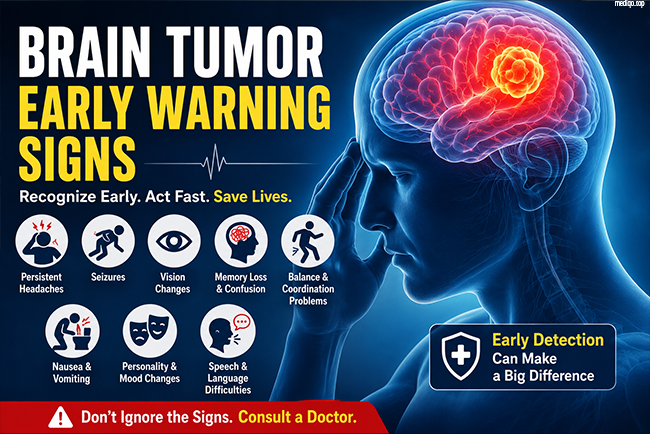
Brain tumors develop when abnormal cells grow inside the brain. These growths can affect brain function depending on their size, type, and location. Early detection plays a key role in improving treatment outcomes and reducing complications. Many early symptoms appear mild and are often mistaken for stress or common illnesses. Recognizing warning signs early can help ensure timely medical attention.
One of the most common early symptoms is a persistent headache. Unlike normal headaches, these often become more frequent or intense over time. They may worsen in the morning or during sleep. Some people also experience headaches accompanied by nausea or vomiting. These patterns should not be ignored, especially if pain relief medicines stop working effectively.
Seizures can occur when abnormal brain activity develops. A person with no history of epilepsy who suddenly experiences a seizure should seek immediate medical evaluation. Symptoms may include sudden shaking, loss of awareness, or brief confusion. Even mild seizure-like episodes, such as staring spells, can indicate neurological changes.
Brain tumors can affect nerves responsible for vision and hearing. Blurred vision, double vision, or partial vision loss may occur gradually. Some individuals may also experience ringing in the ears or reduced hearing ability. These symptoms often worsen over time and may affect daily activities such as reading or driving.
Read more >> Blood Cancer Symptoms in Adults: Early Warning Signs
Changes in memory, concentration, and decision-making can be early warning signs. A person may struggle to recall recent events or find it difficult to focus on tasks. Confusion in familiar environments may also appear. These cognitive changes often develop slowly and may be mistaken for stress or fatigue.
A brain tumor can affect areas that control movement and balance. Individuals may feel unsteady while walking or experience frequent dizziness. Difficulty in coordinating hand movements or frequent falls may also occur. These symptoms should be evaluated, especially if they appear suddenly or worsen over time.
Unexplained nausea or vomiting, especially in the morning, can be linked to increased pressure inside the skull. This symptom often occurs alongside headaches. If vomiting happens without digestive illness or food-related causes, it may indicate neurological concerns that require medical attention.
Brain tumors may affect emotional control and behavior. A person may become unusually irritable, depressed, or anxious without clear reasons. Family members often notice these subtle changes first. Sudden personality shifts should not be ignored, especially when combined with physical symptoms.
Some tumors affect areas responsible for speech. This can lead to difficulty finding words, slurred speech, or trouble understanding conversations. These symptoms may develop gradually or appear suddenly depending on tumor location. Early evaluation can help identify underlying neurological issues.
Brain tumor symptoms vary widely and often resemble less serious conditions. However, persistent or worsening symptoms should always be evaluated by a healthcare professional. Early diagnosis through imaging tests can significantly improve treatment outcomes. Paying attention to early warning signs helps protect long-term brain health and overall well-being.