Physical Address
304 North Cardinal St.
Dorchester Center, MA 02124
Physical Address
304 North Cardinal St.
Dorchester Center, MA 02124
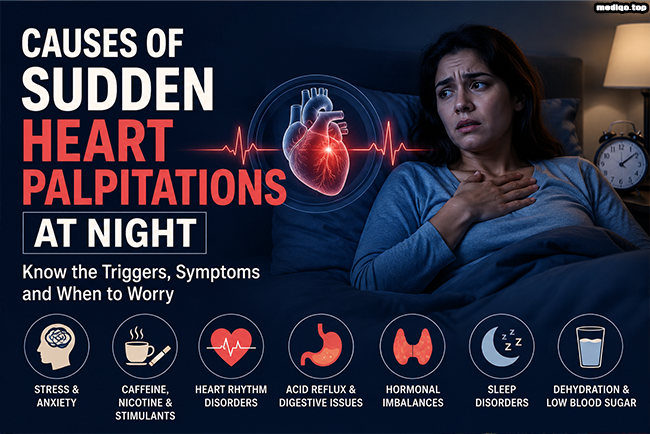
Sudden heart palpitations at night can feel scary. Many people notice their heart beating fast, hard, or irregular when they lie down to sleep. This often happens because the body becomes more aware of internal sensations in a quiet environment. In some cases, lifestyle factors or medical conditions trigger the problem. Understanding the causes helps reduce fear and guide proper treatment.
Stress and anxiety are among the most common causes of nighttime palpitations. When a person feels anxious, the body releases stress hormones like adrenaline. These hormones increase heart rate and make the heartbeat stronger. At night, thoughts may become more intense, especially when the mind is not distracted. This can lead to sudden episodes of racing or pounding heartbeats.
Relaxation techniques, breathing exercises, and better sleep habits often help reduce these symptoms. Managing daily stress also plays a key role in prevention.
Caffeine and nicotine can strongly affect heart rhythm. Coffee, energy drinks, tea, and chocolate contain caffeine, which stimulates the nervous system. Smoking or vaping introduces nicotine, which also increases heart rate.
If a person consumes these substances late in the day, palpitations may appear at night. Even some weight-loss supplements and energy boosters can trigger similar effects. Reducing or avoiding stimulants in the evening can significantly improve sleep quality and heart comfort.
Sometimes palpitations occur due to arrhythmias, which are irregular heart rhythms. In this condition, the electrical signals of the heart do not work properly. This can cause the heart to beat too fast, too slow, or unevenly.
Some arrhythmias are harmless, but others may require medical attention. If palpitations come with dizziness, chest pain, or shortness of breath, a doctor should evaluate the condition. Early diagnosis helps prevent complications.
Acid reflux can also trigger nighttime heart palpitations. When stomach acid moves up into the esophagus, it creates discomfort and pressure in the chest. This sensation may feel similar to heart-related symptoms.
Eating heavy meals late at night increases the risk. Spicy or fatty foods can make it worse. Lying down right after eating also contributes to the problem. Improving eating habits and avoiding late-night meals can reduce symptoms.
The thyroid gland controls metabolism and energy levels. An overactive thyroid, known as hyperthyroidism, can cause rapid heartbeat and palpitations. Hormonal changes in the body may also affect heart rhythm.
People with thyroid issues often experience additional symptoms like weight changes, sweating, or nervousness. A simple blood test can help detect thyroid-related causes.
Certain medications may cause palpitations as a side effect. Cold medicines, asthma inhalers, and some antidepressants can increase heart rate. Herbal supplements and unregulated products may also contain stimulants.
It is important to check labels and consult a healthcare provider before using new medications or supplements. Adjusting dosage or switching medication can often solve the issue.
Low blood sugar can trigger adrenaline release, which increases heart rate. This often happens when a person skips meals or fasts for long hours. Dehydration can also strain the heart, making it work harder to maintain blood flow.
Drinking enough water and maintaining regular meals helps stabilize energy levels and heart rhythm.
Read more >> Discover the Benefits of OSUFI Collagen Essence Toner for Glowing Skin
Sleep apnea is a condition where breathing repeatedly stops and starts during sleep. This reduces oxygen levels in the body and forces the heart to work harder. As a result, palpitations may occur at night.
People with sleep apnea often snore loudly and feel tired during the day. Proper diagnosis and treatment can significantly improve heart health and sleep quality.
Occasional palpitations are often harmless. However, medical attention is necessary if symptoms happen frequently or worsen over time. Warning signs include chest pain, fainting, severe dizziness, or shortness of breath.
A doctor may recommend an ECG, blood tests, or heart monitoring to find the exact cause. Early evaluation ensures safety and peace of mind.
Sudden heart palpitations at night can come from many causes, including stress, stimulants, digestive issues, and heart conditions. Most cases are not dangerous, but recurring symptoms should not be ignored. Healthy habits, stress control, and medical advice can help manage and prevent nighttime palpitations effectively.