Physical Address
304 North Cardinal St.
Dorchester Center, MA 02124
Physical Address
304 North Cardinal St.
Dorchester Center, MA 02124

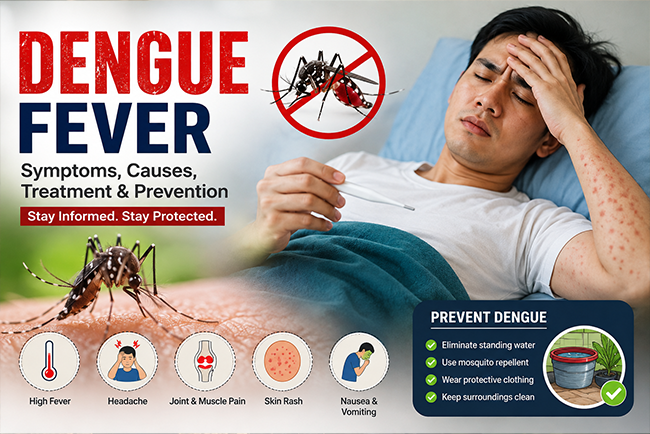
Dengue Fever is a mosquito-borne viral disease that affects millions of people every year, especially in tropical and subtropical regions. It spreads through the bite of infected Aedes mosquitoes, mainly Aedes aegypti. Although most people recover within a week, severe cases can become life-threatening if left untreated. Understanding Dengue Fever symptoms, treatment, and prevention can help reduce complications and save lives.
Dengue Fever is caused by the dengue virus, which has four different strains (DENV-1, DENV-2, DENV-3, and DENV-4). A person can become infected more than once because immunity develops only against the specific strain previously contracted.
The disease is common in Asia, Latin America, Africa, and parts of the Pacific. Seasonal outbreaks often occur during the rainy months when mosquito breeding increases.
Symptoms usually appear 4–10 days after being bitten by an infected mosquito.
Common Dengue Fever symptoms include:
Warning signs of severe dengue include:
Seek immediate medical care if these symptoms develop.
Read More>>F1: The Movie (2025): Brad Pitt Brings Formula 1 Action to the Big Screen
The primary cause of Dengue Fever is infection with the dengue virus transmitted by infected mosquitoes. The disease does not spread directly from person to person.
Risk factors include:
Doctors diagnose Dengue Fever using:
There is no specific antiviral treatment for Dengue Fever. Treatment mainly focuses on relieving symptoms.
Recommended care includes:
Hospitalization may be necessary for severe dengue cases.
Prevention mainly involves avoiding mosquito bites and reducing mosquito breeding sites.
Effective prevention tips:
Vaccination may be recommended in certain countries for specific age groups and individuals with previous dengue infection.
Read More>>Monkeypox (Mpox): Symptoms, Causes, Treatment, and Prevention Guide
Without proper medical care, severe Dengue Fever can lead to:
Early diagnosis significantly improves recovery and reduces complications.
Dengue Fever remains a major public health concern worldwide. Recognizing symptoms early, staying hydrated, and seeking prompt medical attention are essential for recovery. Preventing mosquito bites and eliminating breeding sites remain the most effective ways to reduce the spread of Dengue Fever. By following preventive measures, individuals and communities can help protect themselves from this potentially serious viral infection.