Physical Address
304 North Cardinal St.
Dorchester Center, MA 02124
Physical Address
304 North Cardinal St.
Dorchester Center, MA 02124
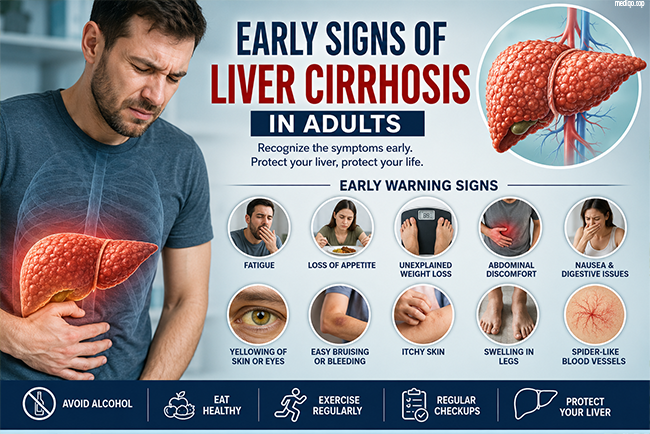
The liver performs hundreds of essential functions every day. It filters toxins, stores nutrients, produces proteins, and supports digestion. When the liver becomes damaged over many years, healthy tissue is gradually replaced by scar tissue. This condition is called liver cirrhosis.
Many adults do not notice cirrhosis during its early stages because symptoms are often mild or mistaken for common health problems. Recognizing the early signs of liver cirrhosis can lead to earlier diagnosis and treatment. Timely medical care may slow disease progression and reduce the risk of serious complications.
Liver cirrhosis is permanent scarring of the liver caused by long-term injury. As scar tissue increases, the liver loses its ability to function properly. Although existing scar tissue cannot usually be reversed, treating the underlying cause may prevent further damage.
Common causes include:
Early symptoms often develop slowly and may appear harmless. Paying attention to these warning signs is important.
Feeling tired most of the time is one of the earliest symptoms. Many people experience low energy even after getting enough sleep. This happens because the damaged liver cannot efficiently process nutrients and remove toxins.
Adults with early cirrhosis may lose interest in food. Reduced appetite often leads to gradual weight loss without intentional dieting.
As liver function declines, the body struggles to maintain muscle mass and proper metabolism. Losing weight without a clear reason should never be ignored.
Some people notice discomfort or a dull ache in the upper right side of the abdomen where the liver is located. This symptom may come and go.
Occasional nausea, bloating, indigestion, or feeling full quickly may occur because the liver supports healthy digestion.
Several visible changes may signal developing liver disease.
Mild jaundice occurs when bilirubin builds up in the bloodstream. Even slight yellow discoloration deserves medical attention.
The liver produces proteins needed for blood clotting. Reduced production may cause frequent bruises, nosebleeds, or bleeding gums.
Persistent itching without a skin rash can result from bile salts accumulating beneath the skin.
Fluid retention may cause mild swelling in the ankles or feet during the early stages of cirrhosis.
Tiny red blood vessels, called spider angiomas, sometimes appear on the face, neck, or chest due to hormonal changes linked to liver disease.
Read more >> How to Prevent Kidney Failure Naturally: Proven Daily Habits
Some adults face a greater risk of developing liver cirrhosis.
Risk factors include:
People with these risk factors should receive regular medical evaluations.
Early diagnosis allows treatment before severe complications develop.
Healthcare providers may recommend:
The diagnosis usually combines medical history, physical examination, laboratory tests, and imaging studies.
Although permanent scarring cannot usually be removed, treatment can slow disease progression and improve quality of life.
Treatment may include:
Lifestyle improvements play a major role in preventing further liver damage.
Do not ignore symptoms that persist for several weeks. Seek medical evaluation if you experience:
Early medical attention greatly improves long-term outcomes.
Many cases of liver cirrhosis can be prevented through healthy habits.
Protect your liver by:
The early signs of liver cirrhosis in adults are often subtle, but they should never be dismissed. Persistent fatigue, appetite loss, mild jaundice, unexplained weight loss, easy bruising, and abdominal discomfort may indicate ongoing liver damage. Early diagnosis provides the best opportunity to slow disease progression and prevent life-threatening complications. If you notice any warning signs, consult a healthcare professional promptly. Protecting your liver today can help preserve your overall health for years to come.