Physical Address
304 North Cardinal St.
Dorchester Center, MA 02124
Physical Address
304 North Cardinal St.
Dorchester Center, MA 02124

Food poisoning symptoms appear when you eat contaminated food or drink. Bacteria, viruses, or toxins often cause this condition. Symptoms may start within hours or take a few days to show.
Most cases affect the digestive system first. The body reacts quickly to remove harmful substances. That is why symptoms often come on suddenly.
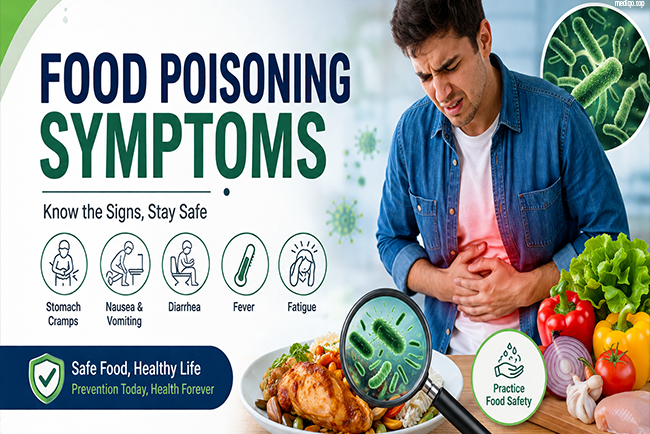
Common signs include stomach pain, nausea, vomiting, and diarrhea. Some people also feel weak or dizzy. Fever may appear in more serious cases.
Symptoms usually last from a few hours to several days. In most cases, the condition improves without medical treatment. However, severe cases need medical attention.
Food poisoning symptoms vary from mild to severe. The most frequent signs involve the stomach and intestines.
Nausea is often the first symptom. It may be followed by vomiting. Diarrhea is also very common and can be watery or frequent.
Stomach cramps can cause sharp or dull pain. These cramps may come and go. Loss of appetite often appears as well.
Some people experience fever and chills. Fatigue is also common because the body loses fluids and energy.
Dehydration is a major concern. It can cause dry mouth, dizziness, and reduced urination. Children and older adults are more at risk.
Read more >> Metabolic Disorder Symptoms: Early Signs, Causes, and Health Risks
Food poisoning happens when harmful microorganisms enter the body through food or drinks. Improper food handling increases the risk.
Bacteria like Salmonella and E. coli are common causes. Viruses such as norovirus can also spread easily. Contaminated water can also trigger infection.
Undercooked meat, raw seafood, and unwashed vegetables are frequent sources. Poor hygiene during food preparation also plays a role.
Leaving cooked food at room temperature for too long allows bacteria to grow. Cross-contamination between raw and cooked foods is another major cause.
Eating expired or poorly stored food increases risk significantly. Safe food practices help reduce these dangers.
Most food poisoning cases improve within a few days. However, some symptoms require urgent medical care.
Seek help if vomiting continues for more than 24 hours. High fever above 38.5°C is also a warning sign.
Blood in stool or severe abdominal pain should not be ignored. These symptoms may indicate a serious infection.
Signs of dehydration need immediate attention. These include very dry mouth, confusion, or no urination for several hours.
Children, elderly people, and pregnant women should be monitored closely. Their bodies can become weak more quickly.
Treatment mainly focuses on rest and hydration. The body needs time to remove toxins naturally.
Drink plenty of fluids like water, oral rehydration solutions, or clear soups. Avoid caffeine and alcohol during recovery.
Eat light foods such as rice, bananas, or toast when you feel better. Avoid fatty or spicy foods until fully recovered.
Doctors may prescribe medication in severe cases. Antibiotics are used only if bacteria cause the infection.
Most people recover without complications if they rest properly and stay hydrated.
Food poisoning can often be prevented with simple habits. Good hygiene is the first step.
Wash hands before handling food. Clean kitchen surfaces regularly. Keep raw and cooked foods separate.
Cook food at safe temperatures. Make sure meat and seafood are fully cooked. Store food properly in the refrigerator.
Avoid eating food that smells or looks spoiled. Check expiration dates before consuming packaged items.
Drink clean and safe water. Be careful when eating outside or from unknown sources.
Food poisoning symptoms can be uncomfortable, but most cases are preventable and manageable. Awareness and safe food practices can protect you and your family from serious illness.