Physical Address
304 North Cardinal St.
Dorchester Center, MA 02124
Physical Address
304 North Cardinal St.
Dorchester Center, MA 02124

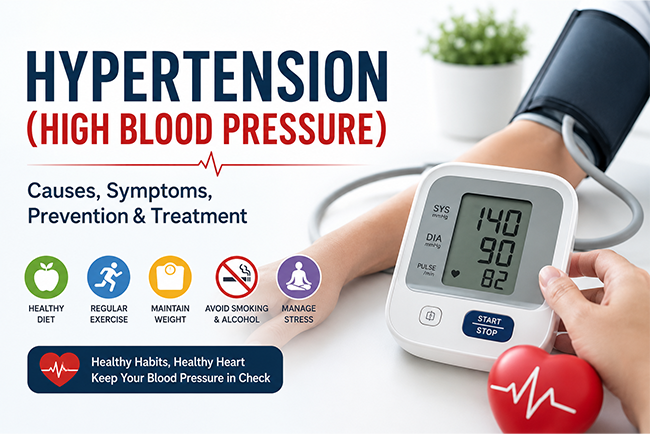
Hypertension, also known as high blood pressure, is one of the most common health conditions affecting millions of people worldwide. It happens when the force of blood against the artery walls remains consistently too high. If left untreated, hypertension can increase the risk of heart disease, stroke, kidney damage, and other serious complications.
In this article, you will learn about the causes, symptoms, risk factors, and effective ways to prevent high blood pressure naturally.
Hypertension is a condition where blood pressure levels stay higher than normal for a long time. Blood pressure is measured using two numbers:
A normal reading is usually around 120/80 mmHg. Blood pressure higher than 140/90 mmHg is generally considered hypertension.
Read More>>Diabetes Mellitus: Symptoms, Causes, Treatment, and Prevention
Several lifestyle and medical factors can contribute to hypertension. The most common causes include:
Unhealthy habits over time can damage blood vessels and make the heart work harder.
High blood pressure is often called the “silent killer” because many people do not notice symptoms in the early stages. However, severe hypertension may cause:
Regular health checkups are important because symptoms may not appear until serious complications develop.
Some people are more likely to develop high blood pressure than others. Major risk factors include:
People with a family history of hypertension should monitor their blood pressure regularly.
Preventing hypertension mainly involves healthy lifestyle choices. Here are some effective prevention tips:
Eat more fruits, vegetables, whole grains, and lean protein. Reduce processed foods and limit salt intake.
Physical activity helps improve heart health and blood circulation. Aim for at least 30 minutes of exercise most days of the week.
Losing even a small amount of excess weight can help lower blood pressure naturally.
Smoking damages blood vessels, while excessive alcohol can raise blood pressure levels.
Practice relaxation techniques like meditation, deep breathing, or yoga to reduce stress.
Poor sleep can increase the risk of hypertension. Adults should aim for 7–8 hours of quality sleep daily.
Doctors may recommend lifestyle changes and medications depending on the severity of the condition. Common medications include:
Always follow medical advice before starting or stopping any medication.