Physical Address
304 North Cardinal St.
Dorchester Center, MA 02124
Physical Address
304 North Cardinal St.
Dorchester Center, MA 02124
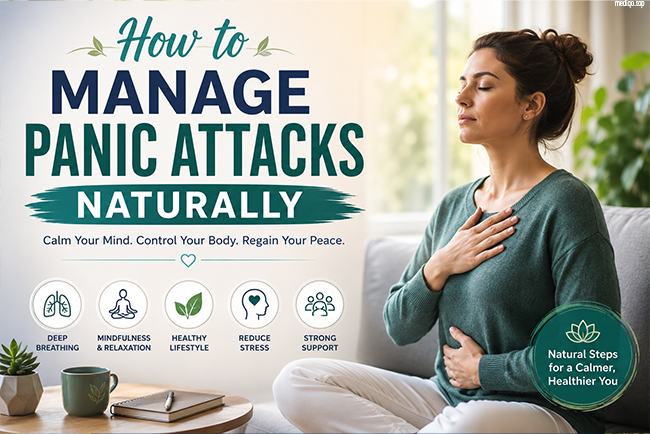
Panic attacks can feel frightening and overwhelming. They often appear without warning and cause intense physical and emotional symptoms. Many people experience a racing heart, dizziness, chest tightness, or difficulty breathing. While panic attacks are not usually dangerous, they can disrupt daily life. The good news is that several natural strategies can help reduce their frequency and intensity. Learning how to manage panic attacks naturally can improve emotional well-being and restore confidence.
A panic attack is a sudden episode of intense fear that reaches its peak within minutes. During an attack, the body’s fight-or-flight response becomes active even when no real danger exists. Symptoms may include rapid heartbeat, sweating, trembling, shortness of breath, nausea, and a feeling of losing control. Some people fear they are having a heart attack because the symptoms feel so intense. Understanding that panic attacks usually pass within a short time can reduce fear during future episodes.
Controlled breathing is one of the most effective natural methods for calming a panic attack. Panic often causes fast and shallow breathing, which can make symptoms worse. Slow, deep breaths help relax the nervous system and improve oxygen flow.
Try inhaling through your nose for four seconds, holding your breath for two seconds, and exhaling slowly through your mouth for six seconds. Repeat this pattern until your breathing becomes steady. Regular breathing exercises can also lower anxiety between panic attacks.
Grounding exercises help shift your attention away from fearful thoughts and back to the present moment. A simple method is the 5-4-3-2-1 technique. Identify five things you can see, four things you can touch, three sounds you hear, two scents you notice, and one thing you can taste.
This exercise interrupts the cycle of panic and reminds your brain that you are safe. Practicing grounding skills every day makes them easier to use during stressful situations.
Read more >> Depression Symptoms That Should Not Be Ignored
Chronic stress increases the risk of panic attacks. Building healthy daily habits can strengthen your body’s ability to handle stress. Regular physical activity releases endorphins that improve mood and reduce anxiety. Walking, cycling, swimming, or yoga are excellent choices.
Quality sleep also plays an important role. Aim for seven to nine hours of sleep each night. A consistent bedtime routine supports emotional balance and lowers stress levels.
What you eat and drink can influence anxiety symptoms. High amounts of caffeine may increase nervousness, rapid heartbeat, and restlessness. Some people notice fewer panic attacks after reducing coffee, energy drinks, or strong tea.
A balanced diet rich in fruits, vegetables, whole grains, lean protein, and healthy fats supports brain health. Staying hydrated and avoiding excessive alcohol can also improve emotional stability.
Mindfulness encourages you to focus on the present instead of worrying about future fears. Daily meditation, even for ten minutes, may reduce anxiety and improve emotional control. Guided meditation, gentle yoga, and progressive muscle relaxation are helpful options.
The goal is not to stop anxious thoughts completely. Instead, mindfulness teaches you to observe them without reacting with fear.
You do not have to face panic attacks alone. Talking with trusted family members or close friends can provide reassurance during difficult moments. Support groups also allow people to share experiences and coping strategies in a safe environment.
If panic attacks happen frequently or interfere with work, relationships, or daily activities, seek professional medical advice. A healthcare provider can determine whether another condition contributes to your symptoms and recommend the most appropriate treatment.
Natural techniques work well for many people, but they may not replace professional treatment in every case. Persistent panic attacks may require cognitive behavioral therapy, medication, or a combination of treatments. Early intervention often leads to better long-term outcomes. Never ignore severe chest pain, fainting, or symptoms that could indicate a medical emergency.
Learning how to manage panic attacks naturally starts with understanding your body’s response to stress. Deep breathing, grounding exercises, regular physical activity, healthy eating, mindfulness, and strong social support can reduce anxiety and improve overall well-being. Consistency is the key to success. Small daily habits often produce lasting improvements over time. If symptoms continue despite self-care, consult a qualified healthcare professional for a complete evaluation and personalized treatment plan.