Physical Address
304 North Cardinal St.
Dorchester Center, MA 02124
Physical Address
304 North Cardinal St.
Dorchester Center, MA 02124
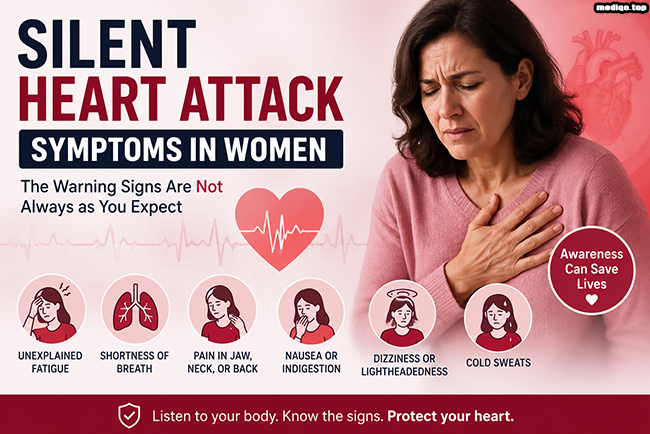
A silent heart attack happens when blood flow to the heart becomes blocked, but the symptoms are mild, unusual, or easy to ignore. Many women do not feel the classic crushing chest pain linked to heart attacks. Instead, they may notice fatigue, nausea, or discomfort in the neck, jaw, or back.
Because the warning signs are subtle, treatment is often delayed. This delay can increase the risk of serious heart damage. Understanding silent heart attack symptoms in women can help save lives.
Chest discomfort remains one of the most common signs. However, women often describe it differently than men. The feeling may seem like pressure, tightness, fullness, or mild burning instead of severe pain.
Some women believe the discomfort is caused by indigestion or stress. The sensation may last only a few minutes and then disappear. Even mild chest pressure should never be ignored.
Unusual tiredness is a major warning sign in women. Many women feel exhausted for days or weeks before a silent heart attack occurs.
Simple tasks such as walking upstairs, carrying groceries, or making the bed may suddenly feel difficult. This type of fatigue often appears without heavy physical activity. Persistent exhaustion can signal that the heart is not getting enough oxygen.
Breathing problems may develop before or during a silent heart attack. Women can feel out of breath while resting or doing light activities.
Some women notice they cannot take a deep breath comfortably. Others wake up feeling breathless during the night. Shortness of breath combined with fatigue or chest discomfort requires immediate medical attention.
Heart attack pain does not always stay in the chest. Women commonly feel discomfort in the jaw, shoulders, upper back, neck, or one or both arms.
The pain may come and go. It can also feel dull instead of sharp. Many people mistake this symptom for muscle strain or poor sleeping posture. When this pain appears with other symptoms, it may point to a silent heart attack.
Digestive symptoms are common in women during a heart attack. Some women feel nauseated, dizzy, or suddenly lightheaded.
Cold sweats without physical exertion can also occur. These symptoms are frequently confused with food poisoning, anxiety, or the flu. Paying attention to multiple symptoms at the same time is important.
Many women report sleep disturbances before a heart attack. They may struggle to fall asleep, wake up frequently, or feel restless at night.
Some also experience unexplained anxiety or a sense that something feels wrong. While anxiety alone does not confirm heart disease, it can appear alongside other warning signs.
Read more >> How to Know If Chest Pain Is Heart Related: Warning Signs and Causes
Several conditions increase the risk of silent heart attacks in women. High blood pressure, diabetes, obesity, smoking, and high cholesterol are major contributors.
Stress and lack of exercise also affect heart health. Women after menopause face a higher risk because hormone levels change over time. A family history of heart disease further increases the chance of heart problems.
Never ignore symptoms that seem unusual or persistent. Seek emergency care if you notice chest pressure, breathing trouble, sudden fatigue, dizziness, or pain spreading to the jaw or arms.
Quick treatment can reduce heart damage and improve survival rates. Even mild symptoms deserve medical evaluation because silent heart attacks can become life-threatening.
Healthy lifestyle habits can lower the risk of heart disease. Eating balanced meals, staying physically active, and avoiding smoking are important steps.
Regular health checkups also help detect blood pressure, diabetes, and cholesterol problems early. Managing stress and getting quality sleep support long-term heart health as well.
Silent heart attack symptoms in women are often difficult to recognize. Many symptoms appear mild or unrelated to the heart. Fatigue, shortness of breath, nausea, jaw pain, and unusual sweating can all signal a serious problem.
Early awareness and fast medical care can save lives. Women should pay attention to unusual body changes and never dismiss persistent symptoms.