Physical Address
304 North Cardinal St.
Dorchester Center, MA 02124
Physical Address
304 North Cardinal St.
Dorchester Center, MA 02124

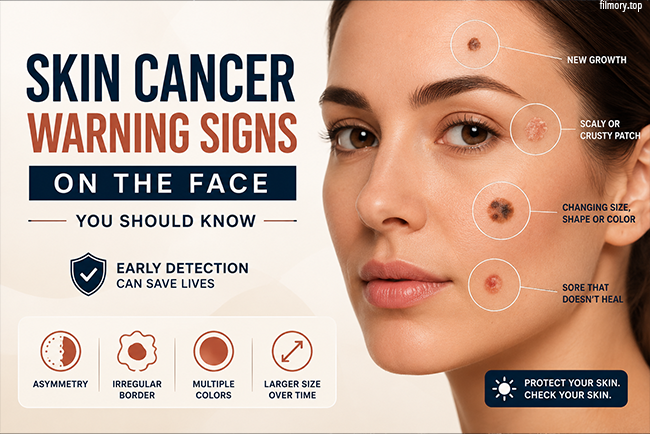
Skin cancer often appears on the face because it receives the most sun exposure. Early detection improves treatment success and reduces complications. Many people ignore small skin changes, which can delay diagnosis. Recognizing warning signs on the face is essential for timely medical care.
A common early warning sign is a sore on the face that does not heal within a few weeks. Normal cuts or pimples usually recover quickly. Skin cancer lesions may stay open, crust over, and then reopen again. They can also bleed easily without clear injury. If a facial wound persists longer than three weeks, it needs medical evaluation.
New moles or changes in existing ones can indicate skin cancer. Dermatologists often use the “ABCDE rule” to assess risk:
Any evolving mole on the face should be checked by a specialist.
Basal cell carcinoma often appears as a small, shiny bump on the face. It may look pearly, waxy, or translucent. These growths can have visible blood vessels on the surface. Over time, they may crust or bleed easily. They are commonly found on the nose, cheeks, and eyelids.
A rough or scaly patch on facial skin can indicate actinic keratosis, a precancerous condition. These patches may feel like sandpaper and appear red, pink, or brown. They are often caused by long-term sun exposure. Without treatment, some of these lesions may develop into squamous cell carcinoma.
Melanoma, the most dangerous type of skin cancer, may appear as a dark spot on the face. It can resemble a mole but often has irregular borders and uneven coloring. It may grow quickly or change in texture. Some melanomas may also itch, bleed, or become painful.
Squamous cell carcinoma may present as a red, firm, or crusted patch. It can grow slowly but steadily over time. These lesions may become tender or painful. They may also develop a raised or wart-like appearance on the face, especially in sun-exposed areas.
Skin cancer can sometimes cause unusual sensations. These include itching, tenderness, numbness, or pain in a specific area of the face. Even without visible changes, persistent discomfort should not be ignored. Any unexplained sensation lasting more than a few weeks requires medical assessment.
Read more >> Early Breast Cancer Lump Symptoms: Key Signs to Know
Any facial lesion that grows in size over time is a warning sign. Rapid enlargement, spreading edges, or deepening of a spot may indicate aggressive skin cancer. Early evaluation helps prevent further progression and improves treatment outcomes.
Seek medical attention if you notice:
Dermatologists may perform a skin examination or biopsy to confirm diagnosis.
Protecting facial skin reduces the risk significantly:
Skin cancer on the face often starts with subtle changes that are easy to overlook. Paying attention to persistent sores, changing moles, and unusual skin patches can lead to early diagnosis. Early treatment remains the most effective way to prevent complications and protect long-term health.