Physical Address
304 North Cardinal St.
Dorchester Center, MA 02124
Physical Address
304 North Cardinal St.
Dorchester Center, MA 02124

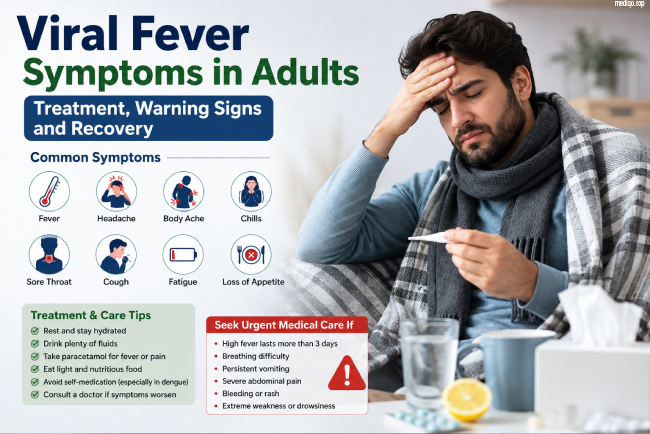
Viral fever is a common illness caused by a viral infection. It can affect adults at any age and may occur with infections such as influenza, COVID-19, dengue, chikungunya, or other viral diseases. The symptoms often include fever, tiredness, headache, body aches, chills, and loss of appetite. However, the exact symptoms and treatment depend on the virus causing the illness.
In tropical countries such as Bangladesh, dengue should also be considered when an adult develops sudden high fever, especially during periods of increased mosquito activity. Dengue can cause high fever, severe headache, pain behind the eyes, muscle and joint pain, nausea, vomiting, and rash.
The symptoms of viral fever can vary from person to person. Common signs include:
Some viral infections cause respiratory symptoms, while others mainly affect the digestive system or produce body aches and fever. Therefore, symptoms alone cannot always identify the exact virus.
Dengue deserves special attention because its symptoms can resemble other viral illnesses. WHO reports that dengue commonly causes high fever, headache, pain behind the eyes, muscle or joint pain, nausea, vomiting, swollen glands, and rash.
There is no single medicine that treats every viral fever. Treatment usually focuses on controlling symptoms while the immune system fights the infection. Antibiotics do not treat viral infections unless a healthcare professional identifies a separate bacterial infection.
Adults should get adequate rest and maintain good fluid intake. Water, oral rehydration solutions, soups, and other suitable fluids can help reduce the risk of dehydration. Eating light, nutritious meals may also support recovery.
For fever or pain, paracetamol (acetaminophen) may be appropriate for many adults when taken according to the product label or a healthcare professional’s advice. Avoid exceeding the recommended dose.
If dengue is possible, do not self-medicate with aspirin or ibuprofen. These medicines can increase the risk of bleeding in people with dengue. WHO recommends paracetamol for symptom relief while advising against aspirin and ibuprofen in dengue.
Read more >> Tuberculosis Cough Duration: 7 Warning Signs
Medical advice is important when fever is severe, persistent, worsening, or accompanied by unusual symptoms. A doctor may recommend examination and laboratory testing to determine the cause.
Seek urgent medical care if fever is accompanied by difficulty breathing, confusion, severe weakness, persistent vomiting, severe abdominal pain, unusual bleeding, blood in vomit or stool, or very cold and pale skin.
Dengue warning signs can sometimes appear when the fever starts to decrease. Therefore, a lower temperature does not always mean that the illness is improving. Severe abdominal pain, persistent vomiting, rapid breathing, bleeding, extreme tiredness, and weakness require immediate medical attention.
The recovery period depends on the specific viral infection and the person’s overall health. Many uncomplicated viral illnesses improve within several days, although tiredness may continue for longer.
For dengue, most people recover within one to two weeks, but fatigue can remain for several weeks after recovery.
During recovery, continue drinking fluids, resting, monitoring symptoms, and following medical advice. Avoid unnecessary medicines, especially antibiotics or painkillers that may be unsafe for a suspected dengue infection.
Viral fever symptoms in adults can range from mild tiredness and low-grade fever to high fever with significant body pain. Because several infections can produce similar symptoms, it is important not to assume that every fever is simply a common viral infection. In areas where dengue is present, sudden high fever with severe headache, body pain, rash, or vomiting should receive appropriate medical attention.
If symptoms become severe or new warning signs develop, seek medical care promptly rather than relying only on home treatment.
Medical disclaimer: This article provides general health information and does not replace professional diagnosis or treatment. Adults with persistent, severe, or rapidly worsening fever should consult a qualified healthcare professional.