Physical Address
304 North Cardinal St.
Dorchester Center, MA 02124
Physical Address
304 North Cardinal St.
Dorchester Center, MA 02124

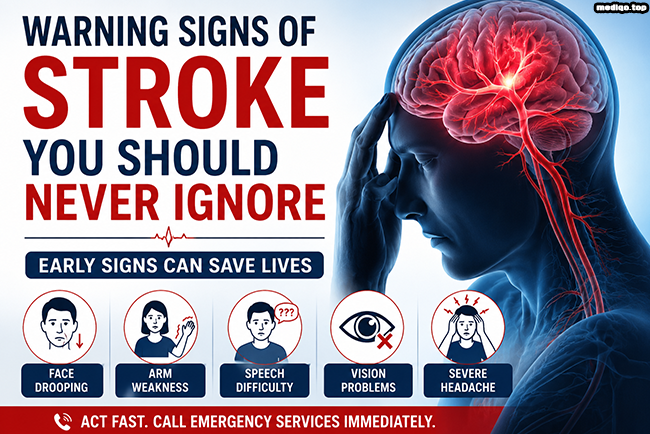
A stroke is a medical emergency that can change a person’s life within minutes. Many people ignore the early warning signs of stroke before it happens because the symptoms often appear suddenly and disappear quickly. Fast action can reduce brain damage and improve recovery chances. Knowing these warning signs helps people seek treatment before severe complications develop.
Every year, millions of people suffer from strokes worldwide. Some strokes occur without warning, but many patients notice small symptoms hours or days earlier. Learning to recognize these signals may save a life.
A stroke happens when blood flow to the brain stops or decreases. Brain cells begin to die within minutes because they do not receive enough oxygen. There are two major types of stroke. Ischemic stroke occurs due to blocked blood vessels, while hemorrhagic stroke happens when a blood vessel bursts.
A transient ischemic attack, also called a mini-stroke, may appear before a major stroke. This condition produces temporary symptoms that disappear within a short time. Many people ignore these early signs, but they often serve as a serious warning.
One of the most common warning signs of stroke before it happens is sudden numbness. This symptom usually affects one side of the body. A person may feel weakness in the face, arm, or leg.
The face may droop on one side when smiling. The arm may drift downward when raised. Weakness often appears without pain, which makes people underestimate the danger. Immediate medical care is necessary when this symptom appears.
Speech problems can signal an upcoming stroke. A person may suddenly slur words or struggle to form clear sentences. Some individuals become confused and cannot understand simple conversations.
These symptoms may last for a few minutes or continue longer. Family members often notice speech changes before the affected person realizes something is wrong. Quick recognition can help doctors begin treatment sooner.
Vision changes can also indicate a stroke warning. Some people experience blurred vision or double vision. Others lose sight in one eye temporarily.
These visual disturbances may happen suddenly and disappear quickly. Even temporary vision loss should never be ignored. It can signal reduced blood flow to the brain.
A sudden and intense headache may occur before a stroke, especially a hemorrhagic stroke. The pain often feels different from normal headaches. Some people describe it as the worst headache of their lives.
This symptom may appear alongside dizziness, vomiting, or confusion. Medical attention is critical because bleeding in the brain can become life-threatening within minutes.
Many stroke patients report sudden dizziness or trouble walking. Loss of coordination may affect daily activities like standing or climbing stairs.
A person may stumble, feel lightheaded, or lose balance without explanation. These symptoms become more concerning when combined with numbness or speech problems.
Doctors recommend the FAST method to identify stroke symptoms quickly.
When any of these symptoms appear, emergency help should be contacted immediately. Early treatment can reduce long-term disability.
Several health conditions increase stroke risk. High blood pressure remains the leading cause. Diabetes, obesity, smoking, and high cholesterol also contribute significantly.
An unhealthy diet and lack of exercise raise the risk further. People with a family history of stroke should stay especially careful. Regular health checkups help detect problems early.
Read more >> Natural Ways to Reduce High Blood Pressure Safely and Effectively
Healthy lifestyle changes can lower stroke risk dramatically. Eating fruits, vegetables, and whole grains supports heart and brain health. Daily exercise improves blood circulation and controls weight.
People should avoid smoking and limit alcohol intake. Managing stress and sleeping well also support overall health. Doctors may prescribe medication for blood pressure or cholesterol when necessary.
Never wait for symptoms to disappear on their own. Even mild symptoms require immediate medical evaluation. Delayed treatment increases the risk of permanent brain damage.
Emergency treatment works best within the first few hours after symptoms begin. Fast medical care can save brain function and improve survival rates.
Recognizing the warning signs of stroke before it happens can save lives. Sudden numbness, speech difficulty, vision problems, dizziness, and severe headaches should never be ignored. Quick action allows doctors to provide life-saving treatment before serious damage occurs.
Everyone should learn the FAST method and understand stroke risk factors. Awareness and prevention remain the strongest tools against this dangerous condition.