Physical Address
304 North Cardinal St.
Dorchester Center, MA 02124
Physical Address
304 North Cardinal St.
Dorchester Center, MA 02124

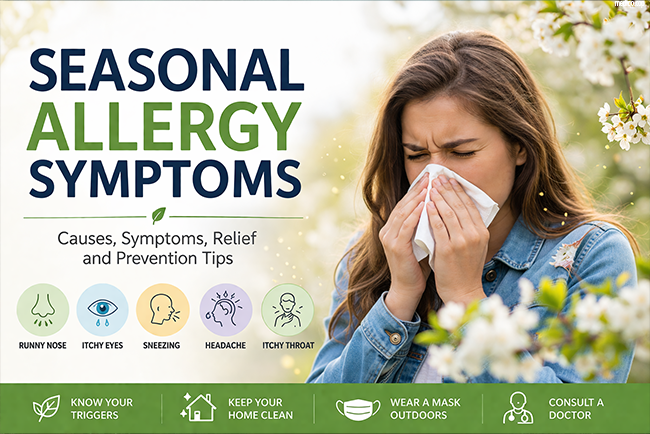
Seasonal allergy symptoms appear when the immune system reacts to allergens in the environment. These allergens often increase during specific seasons. Pollen from trees, grass, and weeds is one of the most common triggers. Many people experience symptoms during spring, summer, or early fall. Seasonal allergies are often known as hay fever or allergic rhinitis.
The body mistakes harmless particles for dangerous substances. As a result, the immune system releases chemicals like histamine. This reaction leads to several uncomfortable symptoms. Seasonal allergies may affect daily routines, sleep quality, and concentration. Understanding the condition helps people manage it more effectively.
Several environmental factors contribute to seasonal allergy symptoms. Pollen is one of the biggest causes. Trees release pollen in spring, while grass pollen becomes common in late spring and summer. Weed pollen often increases during fall. Wind carries pollen through the air, making exposure difficult to avoid.
Mold spores can also trigger seasonal allergies. Damp weather conditions support mold growth outdoors. Leaves, soil, and grass clippings may contain mold spores. Outdoor humidity often increases allergy discomfort. Dust and air pollution may worsen symptoms for sensitive individuals.
Weather changes can also influence allergy severity. Warm and windy days usually spread pollen more easily. Rain may temporarily reduce pollen levels. However, mold levels often rise after rainfall. Seasonal shifts create different allergy patterns throughout the year.
Seasonal allergy symptoms vary from person to person. Some people experience mild irritation, while others face stronger reactions. Symptoms often appear shortly after allergen exposure. They may continue as long as allergens remain in the environment.
Common seasonal allergy symptoms include:
Many people also experience pressure around the sinuses. Headaches may develop when nasal passages become blocked. Irritated eyes can make reading or screen use uncomfortable. Allergy symptoms often resemble the common cold. However, allergies usually do not cause fever.
Read more >> Ulcerative Colitis Treatment: Effective Options, Medications & Diet Guide
Seasonal allergy symptoms may interfere with work, school, and outdoor activities. Constant sneezing and congestion can reduce focus. Poor sleep caused by blocked sinuses may lower energy levels. Some people become tired during allergy season because breathing feels difficult at night.
Outdoor activities may become less enjoyable. Gardening, walking, or exercising outside can increase allergen exposure. Children may struggle to concentrate in school when symptoms become severe. Adults may notice reduced productivity during high pollen periods.
Persistent symptoms can also affect emotional well-being. Irritation and lack of sleep often create stress. Some individuals avoid outdoor environments because of discomfort. Managing symptoms early can help improve quality of life.
Several strategies help reduce seasonal allergy symptoms. Limiting exposure to allergens is one of the most effective methods. Checking daily pollen forecasts can help people plan activities. Staying indoors during high pollen hours may reduce symptoms.
Keeping windows closed during allergy season can also help. Air conditioners may filter airborne allergens. Washing clothes after spending time outdoors removes pollen from fabrics. Showering before bedtime helps remove allergens from hair and skin.
Over-the-counter medications often provide relief. Antihistamines may reduce sneezing, itching, and runny nose. Nasal sprays can improve congestion. Eye drops may relieve irritation and redness. Some individuals benefit from saline nasal rinses.
Drinking enough water helps keep mucus thin. Proper hydration may reduce throat irritation. Eating a balanced diet also supports the immune system. Maintaining a clean home environment reduces indoor allergens.
Some people experience severe seasonal allergy symptoms that require medical advice. Symptoms that continue despite home treatment may need professional evaluation. Persistent congestion, breathing problems, or frequent sinus infections should not be ignored.
Doctors may recommend allergy testing. Testing identifies specific triggers and helps guide treatment. Prescription medications may offer stronger relief when standard options fail. Allergy shots may also help reduce sensitivity over time.
Early treatment often prevents symptoms from becoming worse. Medical support may improve long-term comfort. Proper care allows people to enjoy seasonal changes without constant discomfort.
Seasonal allergy symptoms affect millions of people each year. Pollen, mold, and environmental factors often trigger these reactions. Symptoms such as sneezing, congestion, and itchy eyes may interrupt daily life. Recognizing the causes and symptoms makes management easier.
Simple lifestyle changes can reduce allergen exposure. Medications and home remedies may provide relief. Seeking medical advice becomes important when symptoms remain severe. Understanding seasonal allergy symptoms helps people stay comfortable throughout the year.