Physical Address
304 North Cardinal St.
Dorchester Center, MA 02124
Physical Address
304 North Cardinal St.
Dorchester Center, MA 02124
Low blood sugar, also called hypoglycemia, can become dangerous during sleep. Many people do not notice the warning signs at first. Nighttime hypoglycemia often affects people with diabetes, but it can also happen due to poor eating habits, alcohol use, or certain medications. Knowing the symptoms early can help prevent serious health problems.
Blood sugar levels may drop during sleep for several reasons. Taking too much insulin, skipping dinner, exercising late at night, or drinking alcohol before bed can increase the risk. Some people also experience low blood sugar after long gaps between meals.
When blood glucose drops below normal, the body releases stress hormones. These hormones trigger different symptoms that may interrupt sleep or cause discomfort during the night.
Nighttime hypoglycemia often produces symptoms that wake a person from sleep. These signs may vary from mild to severe depending on how low the sugar level becomes.
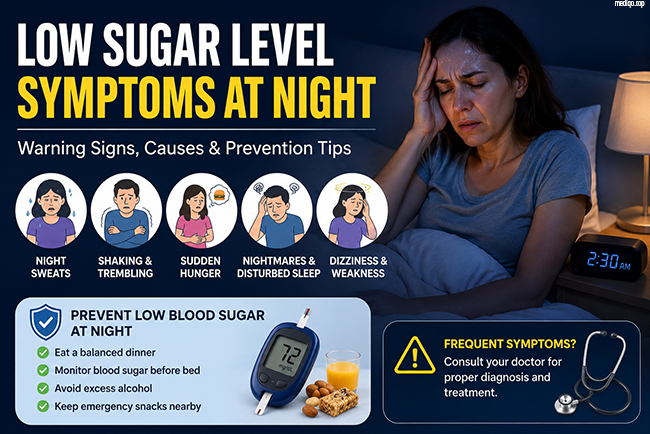
Heavy sweating during sleep is one of the most common symptoms. A person may wake up with soaked clothes or damp bedsheets. This happens because the body reacts quickly to falling blood sugar levels.
Low blood sugar can make the body shake or tremble during the night. The muscles may feel weak, and the heartbeat may become faster than normal.
Some people wake up feeling extremely hungry. This occurs because the body is trying to restore glucose levels quickly.
Nighttime hypoglycemia can affect brain activity during sleep. Many people report vivid dreams, nightmares, or sudden confusion after waking up.
A morning headache may indicate that blood sugar dropped overnight. The brain depends on glucose for energy, so low levels can trigger pain and discomfort.
Low glucose levels reduce the body’s energy supply. This can lead to weakness, dizziness, or difficulty standing after waking up.
The heart may beat rapidly when blood sugar falls too low. This symptom often appears along with anxiety or nervousness.
In some cases, blood sugar levels can become dangerously low. Severe symptoms require immediate medical attention.
A person may wake up confused or unable to think clearly. Simple tasks may feel difficult, and speech can become unclear.
Very low blood sugar can affect brain function and trigger seizures during sleep. This condition is rare but serious.
If glucose levels continue to drop, a person may faint or become unconscious. Emergency treatment is necessary in such cases.
Read more >> Symptoms of Uncontrolled Blood Sugar Levels: Warning Signs
People with diabetes face the highest risk of nighttime hypoglycemia. Those using insulin or certain diabetes medications should monitor blood sugar carefully before bedtime.
Other risk factors include:
Children with diabetes may also experience low sugar levels during sleep. Parents should watch for unusual sweating, restlessness, or nightmares.
Preventing nighttime hypoglycemia starts with healthy habits and regular blood sugar monitoring.
A meal containing protein, healthy fats, and complex carbohydrates can help stabilize glucose levels overnight.
Checking glucose levels before sleeping can reduce the risk of unexpected drops during the night.
Alcohol can lower blood sugar for several hours. Limiting alcohol intake before bedtime is important.
People using insulin should speak with a healthcare professional before changing medication doses.
Quick sources of sugar, such as glucose tablets or fruit juice, should remain close to the bed for emergencies.
Frequent nighttime hypoglycemia should never be ignored. Repeated low sugar episodes can affect heart health, brain function, and sleep quality. A doctor may adjust medications, recommend continuous glucose monitoring, or suggest dietary changes.
People who wake up with headaches, confusion, or heavy sweating several times a week should seek medical advice promptly.
Low sugar level symptoms at night can range from mild sweating to serious medical emergencies. Early recognition is essential for preventing complications. Monitoring blood sugar regularly, eating balanced meals, and following proper treatment plans can lower the risk of nighttime hypoglycemia. If symptoms happen often, professional medical guidance is necessary for safe blood sugar management.