Physical Address
304 North Cardinal St.
Dorchester Center, MA 02124
Physical Address
304 North Cardinal St.
Dorchester Center, MA 02124

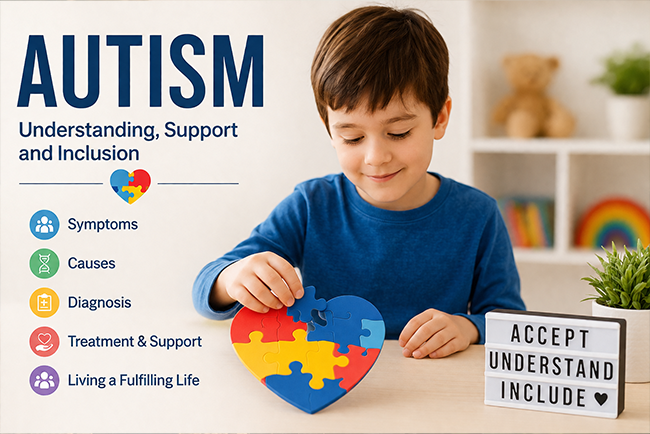
Autism, also known as Autism Spectrum Disorder (ASD), is a developmental condition that affects communication, social interaction, and behavior. Every individual with autism is unique, which is why it is called a “spectrum” disorder. Some people require significant daily support, while others live independently and excel in education, careers, and creative fields.
Understanding autism helps reduce stigma and encourages acceptance. Early diagnosis and appropriate intervention can greatly improve a person’s quality of life.
Autism is a neurodevelopmental condition that typically appears during early childhood. It affects how a person communicates, learns, interacts with others, and experiences the world around them.
The term “spectrum” means that autism presents differently in every individual. Some children may have delayed speech, while others may develop advanced language skills but struggle with social communication.
Read More>>Gastroesophageal Reflux Disease (GERD)
The symptoms of autism vary widely. However, some of the most common signs include:
Symptoms often become noticeable before the age of three, although some individuals receive a diagnosis later in life.
Researchers believe that autism results from a combination of genetic and environmental factors. There is no single known cause.
Possible contributing factors include:
Importantly, vaccines do not cause autism. Extensive scientific research has consistently shown no link between childhood vaccinations and Autism Spectrum Disorder.
Read More>>Beyoncé Releases ‘Morning Dew (Donk)’ and Sparks Fresh Act III Speculation
There is no single medical test for autism. Instead, healthcare professionals evaluate a child’s behavior, communication skills, and developmental history.
Diagnosis may involve:
Early diagnosis allows children to receive therapies that support communication, learning, and independence.
Although there is no cure for autism, many therapies help individuals develop important life skills and reach their full potential.
Common treatment options include:
Some individuals may also receive medication to manage anxiety, ADHD symptoms, or sleep difficulties when recommended by a healthcare provider.
Many people with autism lead successful and fulfilling lives. They attend school, build careers, develop meaningful relationships, and contribute to society in countless ways.
Families, educators, employers, and communities play a vital role in creating supportive and inclusive environments. Understanding individual strengths instead of focusing only on challenges promotes confidence and independence.
Supporting a child with autism requires patience and consistency. Here are a few helpful tips:
Most importantly, remember that every child develops differently.
Autism is a lifelong developmental condition, but it does not define a person’s abilities or potential. With early diagnosis, evidence-based therapies, family support, and an inclusive community, individuals with autism can achieve meaningful goals and enjoy fulfilling lives.
Increasing awareness and acceptance benefits everyone. By understanding autism and embracing neurodiversity, we can build a more compassionate society where every individual has the opportunity to succeed.