Physical Address
304 North Cardinal St.
Dorchester Center, MA 02124
Physical Address
304 North Cardinal St.
Dorchester Center, MA 02124

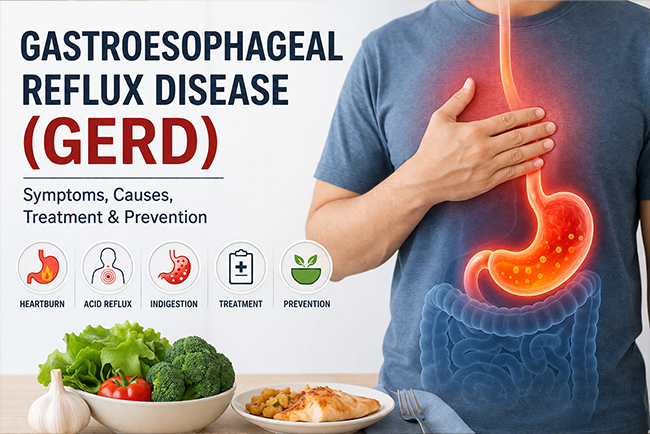
Gastroesophageal Reflux Disease (GERD) is a chronic digestive condition that occurs when stomach acid frequently flows back into the esophagus. As a result, this acid reflux irritates the esophageal lining and causes uncomfortable symptoms. Although occasional heartburn is common, persistent acid reflux may indicate GERD and should not be ignored.
In this guide, you’ll learn about GERD symptoms, causes, treatment options, and practical prevention tips.
GERD develops when the lower esophageal sphincter (LES), a muscular valve between the stomach and esophagus, becomes weak or relaxes at the wrong time. Consequently, stomach acid travels upward into the esophagus instead of remaining in the stomach.
Without proper treatment, GERD can lead to complications such as esophageal inflammation, ulcers, narrowing of the esophagus, or Barrett’s esophagus.
Read More>>Insomnia: Causes, Symptoms, Treatment, and Prevention
The symptoms of GERD vary from person to person. However, the most common signs include:
If these symptoms occur more than twice a week, medical evaluation is recommended.
Several factors increase the likelihood of developing Gastroesophageal Reflux Disease (GERD). These include:
Additionally, stress may worsen symptoms, although it is not a direct cause.
Doctors usually diagnose GERD based on symptoms and medical history. Nevertheless, further testing may be necessary if symptoms are severe or persistent.
Common diagnostic tests include:
These tests help identify acid damage and rule out other digestive disorders.
Read More>>The Resurrection of the Christ: Part One (2027)
Treatment aims to reduce acid reflux, relieve symptoms, and prevent complications.
Many patients experience significant improvement by making simple lifestyle adjustments:
Doctors may recommend:
Always use medications under medical supervision, especially for long-term treatment.
For severe GERD that does not respond to medication, surgical procedures such as fundoplication may provide lasting relief.
Yes. Although not every case is preventable, healthy habits greatly reduce the risk.
Follow these prevention tips:
These habits also improve overall digestive health.
Seek medical attention if you experience:
Early diagnosis helps prevent serious complications and improves treatment success.
Gastroesophageal Reflux Disease (GERD) is a common yet manageable digestive disorder. Fortunately, early diagnosis, healthy lifestyle changes, and appropriate treatment can significantly reduce symptoms and improve quality of life. Therefore, if you experience frequent acid reflux or heartburn, consult a healthcare professional for proper evaluation and personalized care.