Physical Address
304 North Cardinal St.
Dorchester Center, MA 02124
Physical Address
304 North Cardinal St.
Dorchester Center, MA 02124

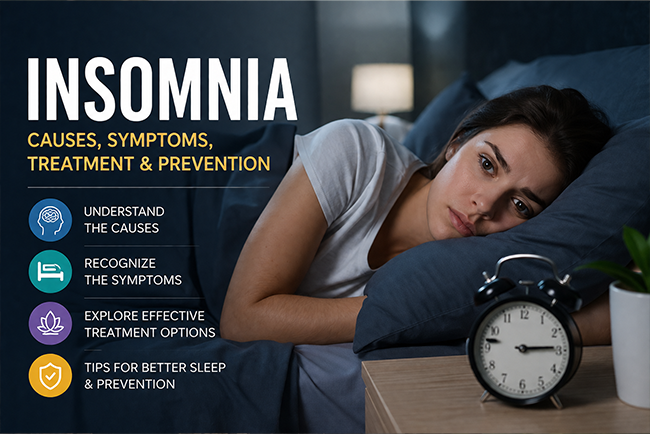
Insomnia is one of the most common sleep disorders affecting millions of people worldwide. It makes it difficult to fall asleep, stay asleep, or wake up feeling refreshed. While occasional sleepless nights are normal, chronic insomnia can negatively impact physical health, mental well-being, and daily performance. Fortunately, understanding the causes and treatment options can help you regain healthy sleep.
Insomnia is a sleep disorder characterized by persistent difficulty falling asleep, staying asleep, or waking up too early despite having enough time to sleep. It can be short-term (acute) or long-term (chronic). Acute insomnia may last for a few days or weeks, whereas chronic insomnia occurs at least three nights per week for three months or longer.
Several factors can contribute to insomnia. Identifying the underlying cause is the first step toward effective treatment.
Additionally, lifestyle changes and emotional stress can temporarily disrupt normal sleep patterns.
Read More>>Vitamin D Deficiency: Causes, Symptoms, Treatment, and Prevention
People with insomnia may experience various symptoms, including:
As a result, untreated insomnia can affect both physical and emotional health.
Doctors usually diagnose insomnia by reviewing your medical history, sleep habits, and symptoms. In some cases, a sleep diary or sleep study may be recommended to identify underlying sleep disorders such as sleep apnea or restless legs syndrome.
The best treatment depends on the cause and severity of insomnia. Common treatment options include:
Healthy sleep habits are often the first recommendation.
CBT-I is considered one of the most effective long-term treatments for chronic insomnia. It helps people replace negative sleep habits and thoughts with healthier behaviors.
Doctors may prescribe sleep medications for short-term use when necessary. However, medications should only be used under medical supervision because long-term use may lead to dependence or side effects.
Read More>>Kathie Lee Gifford Opens Up About Severe Pain That Left Her Wanting to Die
Prevention is often easier than treatment. Consider these practical strategies:
Furthermore, limiting daytime naps can improve nighttime sleep quality.
Seek medical advice if insomnia lasts longer than a few weeks, interferes with your daily activities, or causes significant distress. Persistent insomnia may be linked to an underlying medical or mental health condition that requires professional treatment.
Insomnia is a common but treatable sleep disorder that can significantly affect your quality of life. By understanding its causes, recognizing the symptoms, and following healthy sleep habits, many people can improve their sleep naturally. If sleep problems continue despite lifestyle changes, consult a healthcare professional for a proper diagnosis and personalized treatment plan. Taking action early can help restore restful sleep and improve your overall health.