Physical Address
304 North Cardinal St.
Dorchester Center, MA 02124
Physical Address
304 North Cardinal St.
Dorchester Center, MA 02124

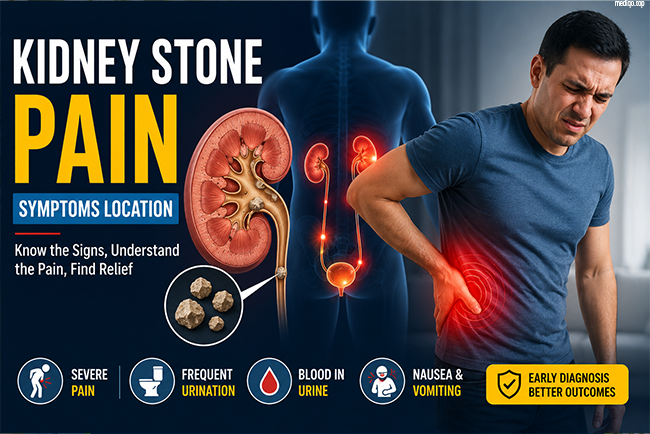
Kidney stones are hard mineral deposits that form inside the kidneys. They can range from the size of a grain of sand to several centimeters. Many small stones pass without causing symptoms. However, larger stones can block the urinary tract and trigger severe pain. Understanding the kidney stone pain symptoms location helps people recognize the condition early and seek prompt treatment.
Pain caused by kidney stones often appears suddenly and becomes intense within minutes. The pain may come in waves as the muscles of the urinary tract contract to move the stone.
The most common kidney stone pain symptoms location is the side of the body, just below the ribs. Doctors often call this flank pain. The discomfort usually starts on one side because stones typically develop in one kidney.
As the stone travels through the urinary tract, the pain changes location. It may spread from the flank to the lower abdomen and then toward the groin. Men may feel pain in the testicles, while women may experience discomfort near the labia.
Common pain locations include:
The pain location often provides clues about where the stone is trapped within the urinary tract.
Pain is the most noticeable symptom, but several other signs often occur at the same time.
Kidney stone pain is often described as one of the most intense types of pain. It may come and go in waves and change in intensity as the stone moves.
Read more >> Fatty Liver Disease Early Symptoms in Non-Drinkers
Urine may appear pink, red, or brown. Even a small stone can scratch the lining of the urinary tract and cause bleeding.
A stone near the bladder may create a constant urge to urinate. Some people pass only small amounts of urine each time.
Pain or burning while urinating often occurs when the stone reaches the lower urinary tract.
The kidneys and digestive system share nerve connections. Severe kidney stone pain can trigger nausea or vomiting.
This symptom may suggest a urinary tract infection along with the kidney stone.
Fever is not a normal symptom of a kidney stone alone. It may indicate a serious infection that requires immediate medical attention.
Many people wonder why kidney stone pain changes location. The answer lies in the stone’s movement. As the stone travels from the kidney into the ureter and toward the bladder, it irritates different parts of the urinary tract.
The pain usually follows this pattern:
This changing pattern is a classic sign of a moving kidney stone.
Some kidney stones pass naturally, but others require medical treatment.
Seek immediate medical care if you experience:
Prompt evaluation helps prevent kidney damage and serious infections.
Healthcare providers combine symptoms with imaging tests to confirm the diagnosis.
Common diagnostic methods include:
A CT scan is often the most accurate method for identifying stone size and location.
Treatment depends on the stone’s size, location, and symptoms.
Many small stones pass within a few days or weeks. Doctors often recommend:
Larger stones may require specialized treatment, including:
The choice depends on the stone’s size, composition, and location.
Many kidney stones can be prevented through healthy lifestyle habits.
Helpful prevention strategies include:
People with recurrent stones may benefit from additional testing to identify the underlying cause.
Recognizing the kidney stone pain symptoms location is essential for early diagnosis and timely treatment. The pain usually begins in the flank and may spread to the lower abdomen and groin as the stone moves through the urinary tract. Blood in the urine, nausea, painful urination, and frequent urination often accompany the pain. Although many small stones pass naturally, severe symptoms or signs of infection require immediate medical attention. Staying well hydrated and following preventive lifestyle measures can reduce the risk of future kidney stones and protect long-term kidney health.