Physical Address
304 North Cardinal St.
Dorchester Center, MA 02124
Physical Address
304 North Cardinal St.
Dorchester Center, MA 02124

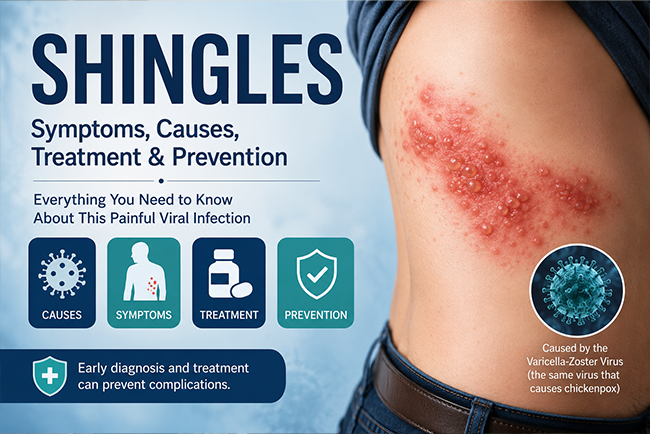
Shingles is a painful viral infection that causes a distinctive rash and nerve pain. It develops when the varicella-zoster virus, the same virus that causes chickenpox, becomes active again years after the initial infection. Understanding shingles, its symptoms, treatment options, and prevention methods can help reduce complications and improve recovery.
Shingles, also known as herpes zoster, is a viral infection that affects the nerves and skin. After a person recovers from chickenpox, the virus remains inactive in nerve tissue. It can reactivate later in life due to aging, stress, or a weakened immune system.
Shingles usually appears as a painful rash on one side of the body or face. Although anyone who has had chickenpox can develop shingles, it is more common in adults over 50 years old.
Read More>>Spider-Man: Brand New Day (2026) – Release Date, Cast, Story, and Everything You Need to Know
The symptoms of shingles often begin before the rash appears. Common signs include:
The rash most commonly appears on the chest, abdomen, or face. In some cases, shingles can affect the eyes, leading to vision problems that require immediate medical attention.
The primary cause of shingles is the reactivation of the varicella-zoster virus. Several factors increase the risk, including:
Not everyone with these risk factors will develop shingles, but they significantly increase the likelihood.
Read More>>Chickenpox: Symptoms, Causes, Treatment, and Prevention Guide
Doctors usually diagnose shingles through a physical examination. The appearance of the rash and the pattern of pain are often enough for diagnosis. In uncertain cases, healthcare providers may collect a sample from a blister to confirm the presence of the virus through laboratory testing.
Early diagnosis is important because antiviral medications work best when started within 72 hours of the rash appearing.
Although there is no cure for shingles, early treatment helps reduce pain and shorten recovery time.
Common treatment options include:
Most people recover within two to four weeks. However, some individuals develop postherpetic neuralgia (PHN), a condition where nerve pain continues long after the rash disappears.
Yes. Vaccination is the most effective way to prevent shingles and its complications. Adults aged 50 and older are generally recommended to receive the shingles vaccine, even if they have previously had shingles.
Additional prevention tips include:
People with active shingles should avoid close contact with individuals who have never had chickenpox, pregnant women, newborns, and those with weakened immune systems until the blisters have completely healed.
While many people recover without lasting problems, shingles may cause complications, including:
Seeking prompt medical care significantly lowers the risk of serious complications.
Contact a healthcare provider immediately if:
Early medical treatment improves recovery and reduces long-term nerve damage.
Shingles is a common but potentially serious viral infection that causes painful rashes and nerve pain. Recognizing the early symptoms, seeking prompt treatment, and getting vaccinated are the best ways to reduce complications. If you suspect shingles, consult your healthcare provider as soon as possible to begin appropriate treatment and protect your long-term health.