Physical Address
304 North Cardinal St.
Dorchester Center, MA 02124
Physical Address
304 North Cardinal St.
Dorchester Center, MA 02124

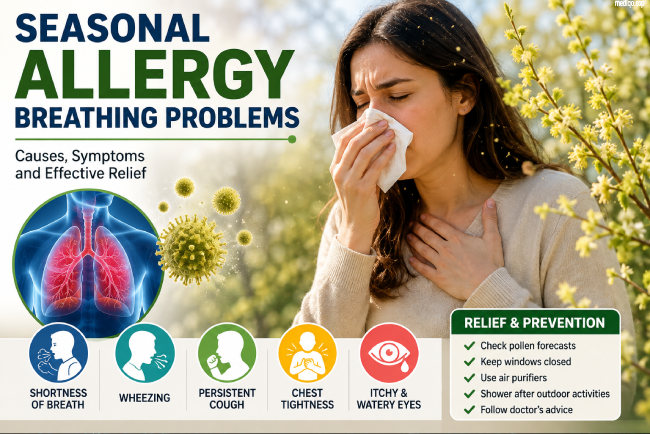
Seasonal allergy breathing problems occur when airborne allergens trigger inflammation in the respiratory system. Pollen from trees, grasses, and weeds is the most common cause. Mold spores can also contribute during certain seasons. While many people experience sneezing and itchy eyes, others develop breathing difficulties that interfere with daily life.
These symptoms range from mild chest tightness to persistent coughing and wheezing. People with asthma or other respiratory conditions face a greater risk because allergens can worsen existing airway inflammation.
Your immune system normally protects your body from harmful substances. During seasonal allergies, it mistakenly identifies harmless pollen as a threat. This reaction releases histamine and other inflammatory chemicals.
As a result, the airways become swollen and produce extra mucus. Breathing may feel more difficult, especially during outdoor activities. In some people, the muscles surrounding the airways tighten, making airflow even more restricted.
Weather also influences pollen levels. Warm, dry, and windy days often carry more pollen through the air. Heavy rain may temporarily reduce pollen counts, although mold growth may increase afterward.
Many people notice difficulty taking deep breaths after spending time outdoors. This symptom may become worse during peak pollen seasons.
A high-pitched whistling sound while breathing often indicates narrowed airways. Wheezing deserves medical attention if it becomes frequent or severe.
An allergy-related cough usually develops because mucus irritates the throat or airways. It often becomes worse at night or after outdoor exposure.
Inflamed airways can create pressure or tightness in the chest. This feeling may resemble mild asthma symptoms.
Most people also experience sneezing, nasal congestion, itchy eyes, watery eyes, and a runny nose. These symptoms often appear together with breathing problems.
Several groups have a higher chance of developing seasonal allergy breathing problems.
Smoking and air pollution may further irritate the lungs and increase symptom severity.
A healthcare provider usually begins with a detailed medical history and physical examination. The timing of symptoms often provides important clues.
Skin prick tests or blood tests can identify the allergens responsible for your reaction. Lung function tests may also be recommended when asthma or significant breathing difficulty is suspected. These evaluations help create a treatment plan that targets your specific triggers.
Read more >> Lung Infection Symptoms in Adults: Signs, Causes, Treatment, and Prevention
Monitor local pollen forecasts before planning outdoor activities. Keep windows closed during high pollen days and use air conditioning with clean filters. Showering after spending time outside also helps remove pollen from your skin and hair.
Several medications can improve symptoms, including:
Always use medications according to medical advice.
For people with severe or long-lasting allergies, allergy shots or sublingual tablets may reduce sensitivity over time. This treatment addresses the underlying allergic response instead of only relieving symptoms.
Healthy habits can reduce exposure and minimize flare-ups.
These small changes often make a noticeable difference.
Breathing problems should never be ignored. Seek immediate medical attention if you experience:
Prompt treatment can prevent serious complications.
Seasonal allergy breathing problems can significantly affect comfort and quality of life, especially during peak pollen seasons. Fortunately, early recognition, proper treatment, and smart prevention strategies help most people control their symptoms effectively. Understanding your allergy triggers and following a personalized management plan can help you breathe easier throughout the year. If breathing symptoms become frequent or severe, consult a qualified healthcare professional for an accurate diagnosis and appropriate treatment.