Physical Address
304 North Cardinal St.
Dorchester Center, MA 02124
Physical Address
304 North Cardinal St.
Dorchester Center, MA 02124

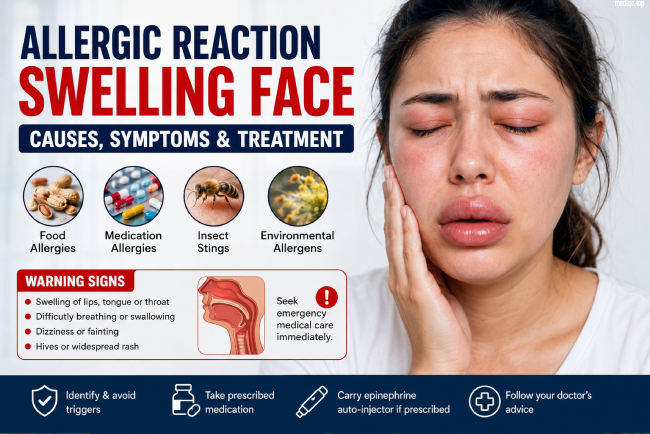
Facial swelling after an allergic reaction can appear suddenly and may affect the lips, eyelids, cheeks, tongue, or other areas of the face. This swelling is often caused by angioedema, a deeper swelling of the skin that can occur with or without hives. While mild cases may settle on their own, swelling involving the tongue or throat can become a medical emergency.
An allergic reaction happens when the immune system responds excessively to a normally harmless substance. The reaction can cause inflammation and fluid movement into deeper skin tissues, producing noticeable swelling.
Common allergic reaction swelling face causes include:
Certain foods are frequent triggers of allergic reactions. Peanuts, tree nuts, shellfish, fish, eggs, milk, and soy can cause symptoms in susceptible people. Facial swelling may occur along with hives, itching, mouth tingling, vomiting, coughing, or breathing problems.
Some medicines can trigger hives and angioedema. Antibiotics such as penicillin, aspirin, ibuprofen, naproxen, and some blood-pressure medicines are among the medications associated with these reactions.
If facial swelling begins after taking a new medicine, contact a healthcare professional promptly. Do not assume that the reaction will remain mild.
Bee, wasp, and other insect stings can cause localized swelling. In people with an allergy, however, the reaction can become widespread. Facial swelling may occur together with hives, wheezing, dizziness, or difficulty breathing.
Pollen, animal allergens, and other airborne substances can trigger allergic symptoms. These triggers more commonly cause sneezing, itchy eyes, congestion, and respiratory symptoms, but allergic reactions can sometimes involve skin swelling as well.
Not every episode of facial swelling is caused by an allergy. Some medicines, particularly certain ACE inhibitors used for blood pressure, can cause angioedema without a typical allergic reaction. Rare forms include hereditary and acquired angioedema.
Allergic facial swelling may appear around the eyes, cheeks, lips, or mouth. Hives and itching can occur at the same time. Some people may also experience warmth, mild discomfort, sneezing, nasal congestion, coughing, or stomach symptoms.
The combination of facial swelling and breathing or swallowing problems is much more concerning than isolated mild swelling.
Read more >> Chronic Urticaria Treatment: Powerful Relief Options
Sudden swelling of the lips, mouth, tongue, or throat can indicate a severe allergic reaction called anaphylaxis. Difficulty breathing, wheezing, throat tightness, trouble swallowing, dizziness, confusion, fainting, or a pale or blue appearance are important warning signs.
Seek emergency medical care immediately if these symptoms occur. Do not wait to see whether they disappear. If a person with a known severe allergy has been prescribed an epinephrine auto-injector, it should be used according to their emergency action plan. Emergency medical evaluation is still required afterward because symptoms can return.
Treatment depends on the cause and severity. Mild allergic hives or angioedema may be treated with antihistamines under appropriate medical guidance. Severe reactions may require emergency treatment, including epinephrine and hospital care.
Doctors may also investigate the trigger. Keeping a record of foods, medicines, insect exposures, cosmetics, and other recent exposures can help identify a possible cause.
Once a trigger is identified, avoiding it is one of the most effective prevention strategies. People with serious allergies should discuss an emergency action plan with their healthcare provider. Depending on their allergy history, they may also need to carry prescribed emergency medication.
Facial swelling should not always be dismissed as a simple allergy. If swelling repeatedly occurs, lasts several days, happens without hives, or has no obvious trigger, medical evaluation can help identify other possible causes.
Medical disclaimer: This article provides general health information and does not replace diagnosis or treatment from a qualified healthcare professional.