Physical Address
304 North Cardinal St.
Dorchester Center, MA 02124
Physical Address
304 North Cardinal St.
Dorchester Center, MA 02124

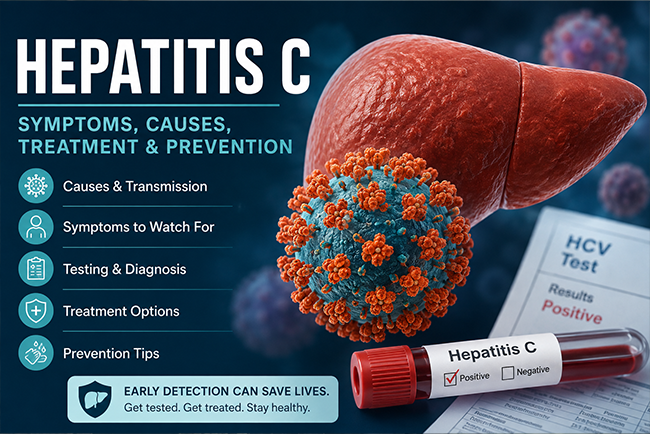
Hepatitis C is a viral infection that affects the liver. It is caused by the hepatitis C virus (HCV) and can lead to short-term or chronic liver disease. Many people have no symptoms for years, so testing is important for early diagnosis. The good news is that modern treatments can cure most people with hepatitis C.
Hepatitis C occurs when HCV infects the liver. Some people clear the virus naturally, but most people who develop an infection can develop chronic hepatitis C. Without treatment, chronic infection may cause liver scarring, cirrhosis, or liver cancer over time.
Unlike hepatitis A and hepatitis B, there is currently no effective vaccine for hepatitis C. However, effective antiviral medicines are available.
Read More>>Hepatitis B: Symptoms, Causes, Treatment, and Prevention
Hepatitis C is mainly transmitted through contact with infected blood. Common routes include:
Hepatitis C is not spread through hugging, kissing, sharing food or drinks, breast milk, or casual contact.
Many people with hepatitis C have no symptoms. When symptoms occur, they may include:
Because symptoms may be absent, a person can have hepatitis C without knowing it. Testing is the only reliable way to determine whether someone has an infection.
Doctors usually diagnose hepatitis C in two steps. First, an HCV antibody blood test checks whether a person has been exposed to the virus. If the result is positive, an HCV RNA test is used to determine whether the virus is currently present.
A positive antibody test does not always mean an active infection because some people naturally clear the virus.
Read More>>Grand Theft Auto VI Extended Look Coming to Netflix on August 27
The treatment of hepatitis C has improved significantly. Direct-acting antiviral (DAA) medicines can cure more than 95% of people with hepatitis C when appropriately prescribed. Treatment is usually taken orally for a relatively short period, depending on the person’s health and liver condition.
People diagnosed with hepatitis C should consult a qualified healthcare professional to determine the appropriate treatment.
There is no hepatitis C vaccine, so prevention focuses on avoiding infected blood. Safe practices include using sterile medical equipment, ensuring donated blood is properly screened, avoiding shared needles, and using appropriate protection during sexual activity when blood exposure is possible.
Hepatitis C can be a serious liver infection, but it is preventable, detectable, and curable. Since many people do not develop noticeable symptoms, appropriate testing can help identify infection early. If you think you may have been exposed to HCV, speak with a healthcare professional about testing.
This article is for educational purposes only and should not replace professional medical advice.