Physical Address
304 North Cardinal St.
Dorchester Center, MA 02124
Physical Address
304 North Cardinal St.
Dorchester Center, MA 02124

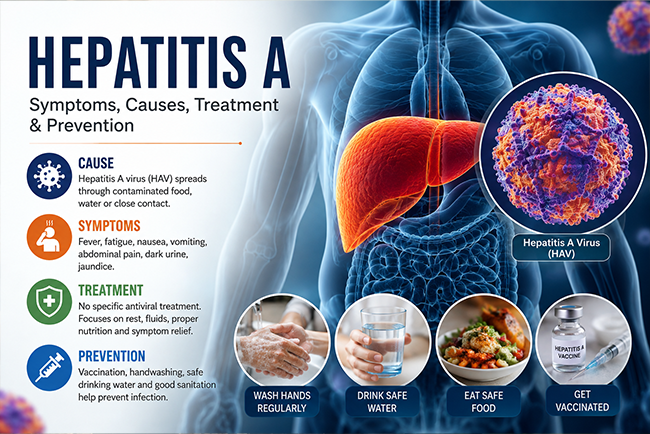
Hepatitis A is a contagious liver infection caused by the hepatitis A virus (HAV). It usually causes a short-term illness, and most people recover completely without permanent liver damage. However, severe cases can sometimes lead to acute liver failure, particularly in older adults and people with existing liver disease.
Hepatitis A causes inflammation of the liver. Unlike hepatitis B and hepatitis C, hepatitis A does not normally become a chronic infection. The virus mainly spreads when a person consumes food or water contaminated with tiny amounts of infected fecal matter.
Poor sanitation, unsafe drinking water, inadequate hand hygiene, and close contact with an infected person can increase the risk of infection.
Hepatitis A is highly contagious. Common ways the virus spreads include:
Casual contact, such as simply being near someone, does not usually spread hepatitis A.
Read More>>Rabies: Symptoms, Causes, Prevention and Treatment
Some people, especially young children, may have few or no noticeable symptoms. When symptoms occur, they can include:
Symptoms commonly develop about 14–28 days after infection. Adults are more likely than young children to develop noticeable symptoms.
Doctors can diagnose hepatitis A using blood tests that look for evidence of a recent hepatitis A infection. If you develop symptoms such as jaundice, dark urine, persistent vomiting, or significant abdominal discomfort, seek medical advice for appropriate testing.
There is no specific antiviral treatment for hepatitis A. Treatment generally focuses on supportive care. This may include adequate fluids, nutritious food, rest, and treatment of symptoms.
Most people recover fully. However, recovery can take several weeks or, in some cases, months. People with severe symptoms or signs of liver failure may require hospital care.
Read More>>The End of Oak Street: Release Date, Cast, Story, and Everything to Know
Vaccination is one of the most effective ways to prevent hepatitis A. Good hygiene also plays an important role. Wash your hands thoroughly with soap and water after using the bathroom, changing diapers, or caring for an infected person, and before preparing or eating food.
Safe drinking water, proper sanitation, food safety, and appropriate vaccination can significantly reduce the risk of infection.
Contact a healthcare professional if you develop symptoms that could indicate hepatitis A, particularly jaundice, dark urine, severe nausea, or abdominal pain. People with chronic liver disease may have a greater risk of serious complications.
Hepatitis A is a preventable viral liver infection that spreads mainly through contaminated food, water, and close contact. Although most people recover completely, prevention remains important. Hepatitis A vaccination, proper handwashing, safe food, clean water, and good sanitation can help protect individuals and communities from infection.