Physical Address
304 North Cardinal St.
Dorchester Center, MA 02124
Physical Address
304 North Cardinal St.
Dorchester Center, MA 02124

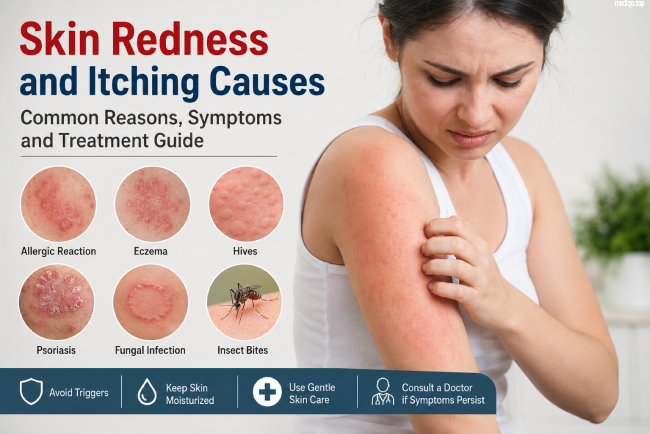
Skin redness and itching are common symptoms that can occur together or separately. They may develop after irritation, an allergic reaction, an insect bite, infection, or an underlying skin condition. In some cases, the cause is temporary and improves within a few days. Persistent or severe symptoms may need medical evaluation.
The appearance of the skin can provide useful clues. Redness may appear as patches, spots, bumps, or widespread discoloration. Itching can range from mild irritation to an intense urge to scratch. Identifying the trigger can help guide appropriate treatment.
Several conditions can cause skin redness and itching. Some are mild, while others require professional treatment.
Contact dermatitis develops when the skin reacts to an irritating or allergenic substance. Common triggers include soaps, detergents, cosmetics, fragrances, cleaning products, and certain metals.
The affected area may become red, swollen, dry, itchy, or blistered. Symptoms often appear where the skin contacted the trigger. Avoiding the substance can help the skin recover.
Eczema is a group of inflammatory skin conditions that can cause persistent itching, dryness, and redness. Atopic dermatitis is one of the most common forms.
Eczema may affect the hands, face, elbows, knees, or other areas. Scratching can damage the skin and increase the risk of infection. Moisturizers and appropriate medical treatments can help control symptoms.
Hives, also called urticaria, cause raised, itchy patches or welts on the skin. They may develop after exposure to certain foods, medicines, insect bites, infections, heat, or other triggers.
Hives can appear suddenly and may move from one area of the body to another. Severe allergic reactions can also cause swelling of the lips, tongue, or throat and difficulty breathing. These symptoms require emergency medical attention.
Psoriasis is an immune-mediated condition that causes skin cells to build up rapidly. It often produces red, inflamed patches covered with silvery scales.
The scalp, elbows, knees, and lower back are commonly affected. Itching may occur, although its intensity varies between individuals. A healthcare professional can recommend treatments based on the type and severity of psoriasis.
Fungal infections can cause redness, itching, scaling, or circular rashes. Ringworm is a common example. It can affect the body, feet, scalp, or groin.
Warm and moist environments can encourage fungal growth. Sharing towels, clothing, or personal items may also increase transmission. Antifungal treatment is often needed when a fungal infection is present.
Mosquitoes, fleas, bedbugs, and other insects can cause localized redness and itching. Small bumps may develop around the bite.
Most uncomplicated insect bites improve with time. However, extensive swelling, spreading redness, pus, fever, or severe allergic symptoms should be assessed by a healthcare professional.
Dry skin is another frequent cause of itching and redness. Cold weather, low humidity, frequent hot showers, and harsh soaps can remove natural skin oils.
Heat rash may also produce itchy, red bumps, particularly during hot and humid weather. Certain medicines, liver or kidney problems, thyroid disorders, and other medical conditions can sometimes cause widespread itching without an obvious rash.
Read more >> Vitiligo Early Signs on Skin: What to Know
Mild redness and itching may improve after avoiding a known irritant and protecting the skin. However, medical advice is recommended when symptoms persist, repeatedly return, spread rapidly, or interfere with sleep and daily activities.
Seek urgent medical care if skin symptoms occur with difficulty breathing, throat or tongue swelling, fainting, severe facial swelling, or other signs of a serious allergic reaction.
You should also seek prompt evaluation if the skin becomes increasingly painful, warm, swollen, or produces pus, especially when fever develops. These symptoms may indicate an infection.
Management depends on the underlying cause. Avoiding suspected irritants can reduce contact dermatitis. Regular use of a gentle, fragrance-free moisturizer can help protect dry skin.
Try not to scratch the affected area because scratching can damage the skin and introduce bacteria. Keep fingernails short and use gentle skin-care products. A healthcare professional may recommend antihistamines, topical corticosteroids, antifungal medicines, or other treatments when appropriate.
Skin redness and itching can have many causes, ranging from dry skin and irritation to eczema, allergies, infections, and inflammatory conditions. The location, appearance, duration, and accompanying symptoms can help identify the likely cause.
If symptoms are persistent, severe, spreading, or accompanied by signs of infection or a serious allergic reaction, professional medical evaluation is important. Correct diagnosis is the best way to choose safe and effective treatment.